
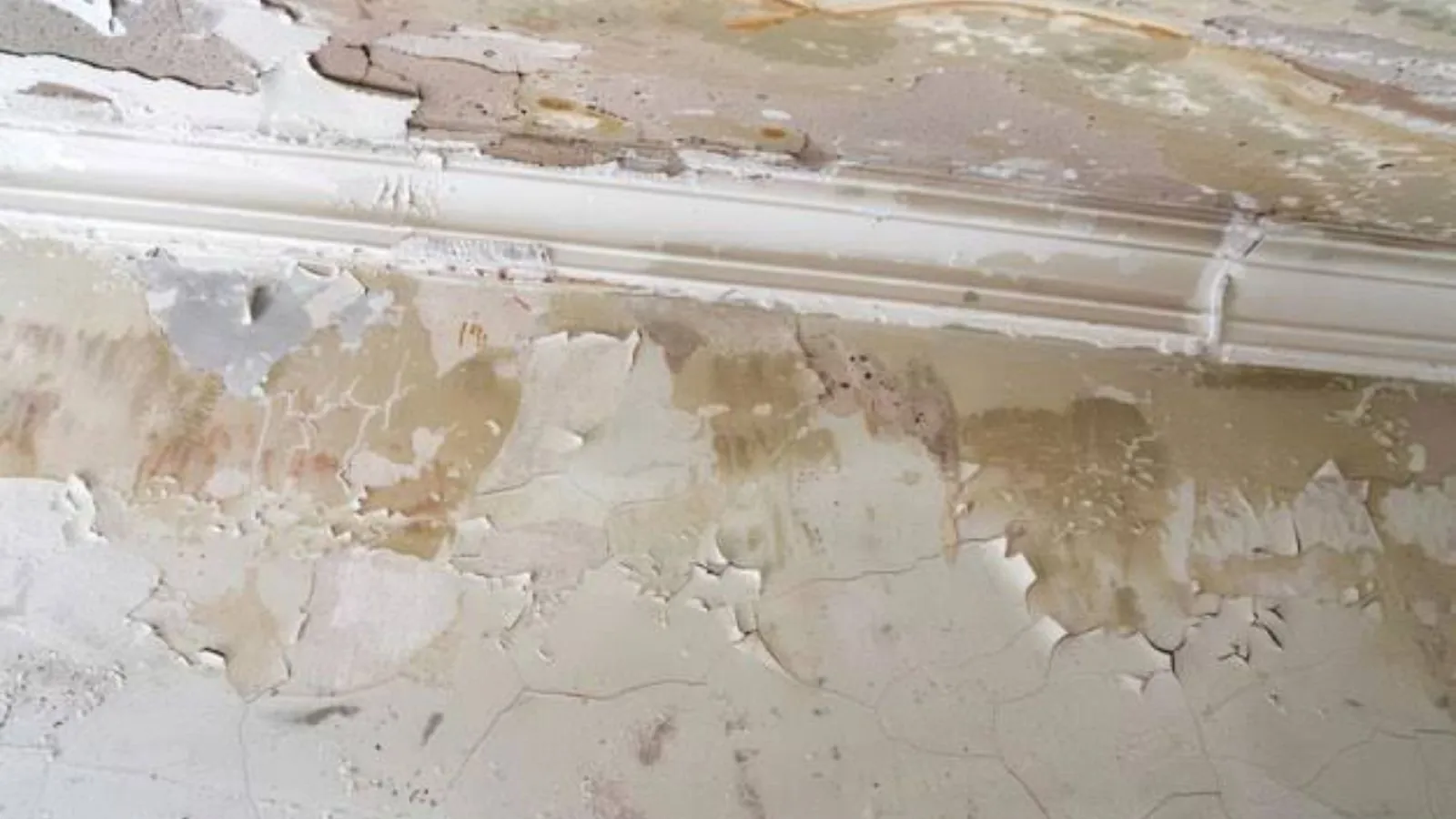
Wall and drywall water damage repair is the drying, cutting and replacement of wall board and insulation after water exposure. In Blue Springs, wet walls appear after pipe leaks, storms and appliance failures. Call when you see staining, bubbling paint or soft drywall, because the wet area usually extends past the visible stain.
Gypsum drywall soaks water like a wick. Water from the floor can climb several inches above the waterline, and insulation inside the cavity stays wet long after the surface feels dry.
Signs that a wall is wet
- Stains that spread or return after drying..
- Paint that bubbles, peels or blisters..
- Drywall that feels soft, crumbles or sags..
- A musty smell with no visible source..
- Baseboards that swell or pull away..
Dry in place or cut out?
Clean water caught early lets drywall dry in place, sometimes with special wall cavity drying systems. Drywall that is crumbling, sagging or contaminated is cut out. Crews often cut a flood cut, which is a horizontal cut above the wicking line, so they can remove wet insulation and let the cavity dry.
The decision comes from moisture readings, not from looks. A wall can look fine and hold water inside. The structural drying page explains how readings are taken.
| Wall condition | Likely approach | Notes. |
|---|---|---|
| Damp but intact, clean water | Dry in place | Monitor readings. |
| Soft, bubbled or sagging | Remove and replace | Strength is lost. |
| Wet insulation behind board | Cut open and remove insulation | Insulation holds water. |
| Contaminated water | Remove affected board | Not dried in place. |
| Painted plaster | Case by case | Plaster dries slowly. |
Is a wall stained or soft?
Call, describe the wall and the likely source. Crews map moisture before cutting.
Call (816) 575-8173Repair after drying
After readings confirm the wall is dry, new drywall is hung, taped, finished and painted. Matching texture and paint is part of the job, and many restoration companies can also handle rebuild, while others hand off to a contractor. Ask who handles it and get it in writing.
If the stain started above, the ceiling repair page covers ceilings. If a pipe is the cause, the burst pipe page covers pipe breaks.
Walls in Blue Springs homes
Newer Blue Springs construction uses gypsum board over wood framing, and older homes may have plaster or paneling. The material changes how a wall dries. Ask crews to identify the wall type before deciding.
Crews cover ZIP codes 64013, 64014 and 64015 and neighbors such as Buckner. If mold is visible on the wall, see the mold remediation page.
How a flood cut works
A flood cut is a clean horizontal cut made a set height above the wet line, often a foot or two. Removing the lower section lets crews take out wet insulation, look at the framing and give the cavity air. A straight cut is easier to patch than a ragged one, and it leaves intact drywall above the line.
Crews check the cavity for wet insulation, rusty fasteners and stained framing. Wood framing can be dried, and it is cleaned if mold appears. Metal studs are cleaned and dried. After readings are stable, new board is hung to the cut line.
Matching paint and texture
Fresh drywall on an old wall often shows if the texture and paint do not match. Ask whether the price includes texture matching and a full-wall paint, not just a patch spot. Painting an entire wall to a corner is usually cleaner than feathering a patch into the middle.
If the home has old paint, ask the contractor about lead-safe work practices. Homes built before 1978 may have lead-based paint, and the EPA has rules for contractors who disturb it.
Where leaks in walls come from
- Supply lines and shutoff valves in the wall..
- Tub and shower surrounds with failed seals..
- Window and door flashing during storms..
- Condensation from poorly insulated pipes..
- Roof leaks that travel down inside the cavity..
Older houses, such as those documented in Historic Downtown Blue Springs, may have plaster and wood trim, so ask the crew to check wall cavities and baseboards before closing anything up.
Whether a wall is dried or opened follows the ANSI/IICRC S500 standard and moisture readings, and the EPA guidelines advise drying within 24 to 48 hours.
What to do before help arrives
- Stay away from outlets and switches in a wet wall..
- Do not poke or cut a sagging ceiling or wall yourself..
- Move furniture away from the wall..
- Photograph stains and mark their edges with a pencil and date..
What shapes cost
Wall jobs depend on how much board and insulation comes out.
- Linear feet of wall affected.
- Water category.
- Insulation replacement.
- Drying days.
- Texture and paint matching.
Want your real number? Call (816) 575-8173. Scope and price are explained before work starts.
Insurance
Sudden leaks that wet walls are often covered, and long-term seepage is often excluded. Photograph the wall before cutting and keep the moisture readings.
Wall and drywall questions
Sometimes, if the water was clean and drying started fast. Soft or sagging board is replaced.
Insulation and framing inside the cavity can stay wet. Readings, not looks, decide.
Painting hides the stain but not the moisture. Dry the wall and fix the source first.
No. It means water. Mold depends on how long it stayed wet.