
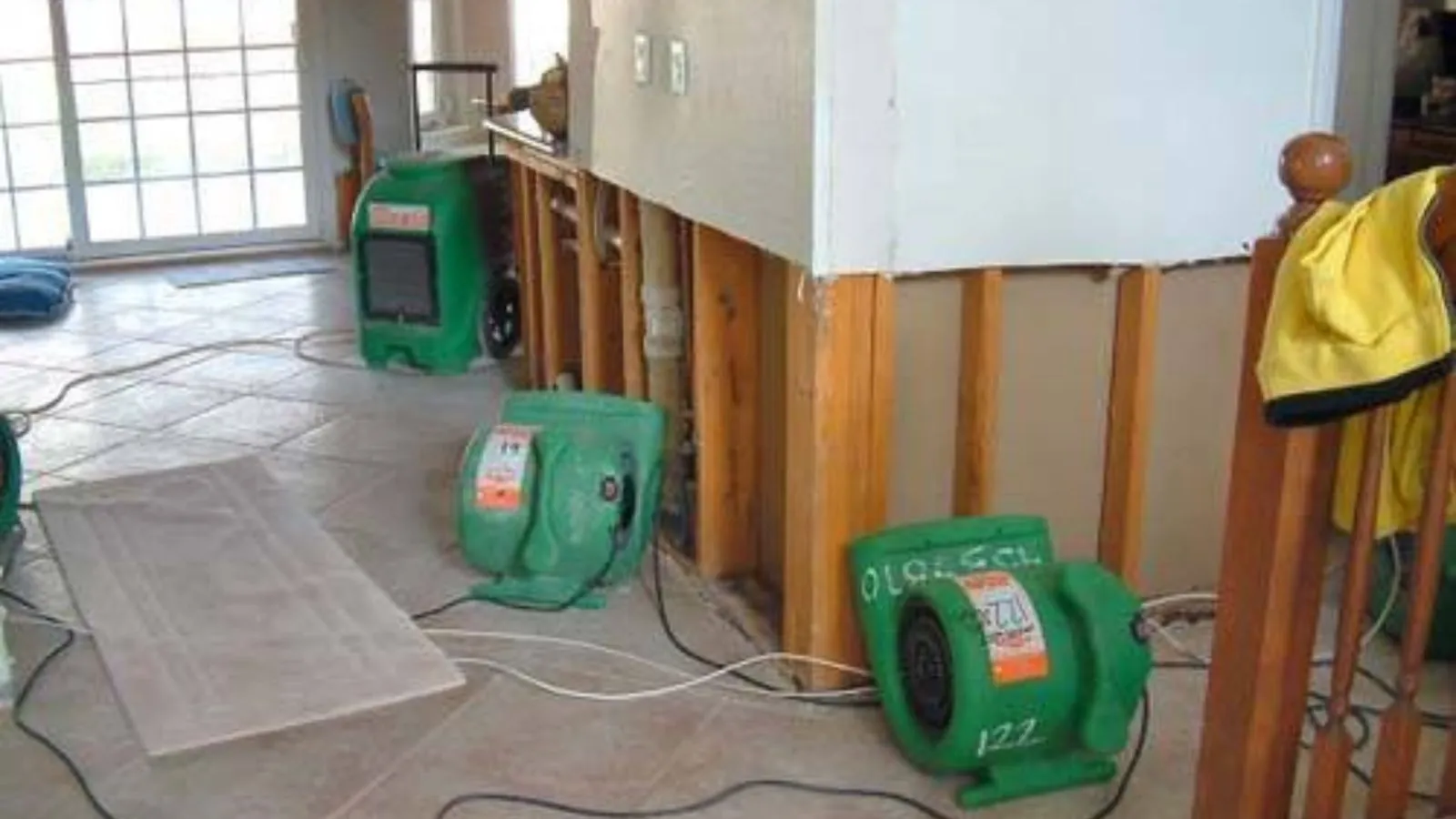
Structural drying is the controlled removal of moisture from building materials using air movers, dehumidifiers and monitoring. After a leak or flood in Blue Springs, the surfaces may look dry while framing and subfloor stay wet. Call the line when materials feel damp, smell musty or a leak has been fixed but moisture remains.
Drying is measured, not guessed. Crews record moisture readings on day one, set equipment, and return to check progress until the structure reaches its goal.
Why does my house still smell damp after the leak is fixed?
A damp smell after a repair usually means water is still trapped in drywall, insulation, subfloor or framing. The trade term for the fix is structural drying. Fixing the leak stops new water, but it does not remove what is already in the materials.
How controlled drying works
Air movers push dry air across wet surfaces. Dehumidifiers pull the released moisture out of the air so it does not settle elsewhere. Crews balance equipment to the room, because too much air moves moisture to new places and too little leaves materials wet.
The ANSI/IICRC S500 standard describes this approach, including documenting readings and drying goals. The EPA advises drying wet materials within 24 to 48 hours to limit mold growth, which is why early equipment placement matters.
| Equipment | What it does | When it is used. |
|---|---|---|
| Air movers | Move air across wet surfaces to speed evaporation | Floors, walls and cabinet bases. |
| Low-grain refrigerant dehumidifiers | Pull moisture from the air | Most rooms after a water loss. |
| Desiccant dehumidifiers | Dry air in cold or very humid conditions | Cold spaces and unheated areas. |
| Injectidry or wall drying systems | Force dry air into wall cavities | Closed walls that cannot be opened. |
| Moisture meters and thermal cameras | Show where water is and track progress | Day one and every check visit. |
How long does drying take?
Many jobs take three to five days of equipment, but the number depends on material, water category, room size and weather. Dense materials such as hardwood, plaster and framing dry slowly. Crews recheck readings daily and remove equipment only when targets are met.
Ask for the readings. A company that cannot show you a starting number and a finishing number is asking you to trust a guess.
Is something still damp?
Call and tell the dispatcher what got wet and when. Crews map moisture before placing equipment.
Call (816) 575-8173What drying does and does not fix
Drying can save drywall, flooring and framing when water is clean and caught early. It cannot rescue materials that were contaminated, or that stayed wet for days and grew mold. In that case, the mold remediation page and the water extraction page explain the neighboring steps.
Where framing is wet behind finished surfaces, crews sometimes drill small holes or remove baseboards to let air reach the cavity. Those openings are repaired afterward.
Drying in Blue Springs weather
Kansas City area summers are humid, so dehumidifiers work harder, and winter drying in a cold house needs heat or desiccant units. A basement with high groundwater humidity behaves differently from an upstairs room. Crews adjust to conditions, and homes in ZIP codes 64013, 64014 and 64015 get the same approach.
Neighbors in Lees Summit and Oak Grove are within the same service area.
What a drying log should show
A drying log is the paper trail of a job. It lists the rooms, the materials in each room, the starting moisture reading, the equipment placed and the readings on each visit. It also records the drying goal for each material, which is based on a dry reference reading from similar unaffected material in the same building.
If a company hands you only an invoice with a line for equipment days, you cannot tell whether the structure was dry when the machines left. Ask for the log before the job starts so the expectation is clear.
Common reasons drying takes longer
- Dense materials such as plaster, hardwood and thick framing..
- Closed wall cavities that hold insulation..
- Cold weather with unheated rooms..
- High outdoor humidity during summer..
- Water that sat for days before equipment arrived..
Larger two-story homes, including many in Waterfield, can take more equipment and more days to dry, since upstairs water often reaches the rooms below.
What to do before help arrives
- Keep wet carpet and pad from being walked on..
- Open closet doors and cabinet doors to let air in..
- Do not seal damp rooms with plastic yourself..
- Keep the electrical safe around any wet area..
What drives drying cost
Drying cost follows the volume of wet material and the days of equipment.
- Square feet and cubic feet of the wet area.
- Water category and contamination.
- Number of dehumidifiers and air movers.
- Number of drying days and monitoring visits.
- Whether walls or floors must be opened.
Want your real number? Call (816) 575-8173. Scope and price are explained before work starts.
Insurance documentation
Drying logs, with dated readings and equipment lists, are the records an adjuster will ask for. Ask the company to provide them. Keep photos from day one.
Structural drying questions
Often three to five days, though it depends on the materials, the water category and the weather. Crews check readings daily and stop when targets are met.
Air movers and dehumidifiers run continuously to dry fast. The noise is the cost of a short drying time.
Fans alone move moisture around. Without dehumidification, humid air settles on cool surfaces and can cause new damage.
Readings. Ask for the day-one and final moisture numbers and the target for each material.