
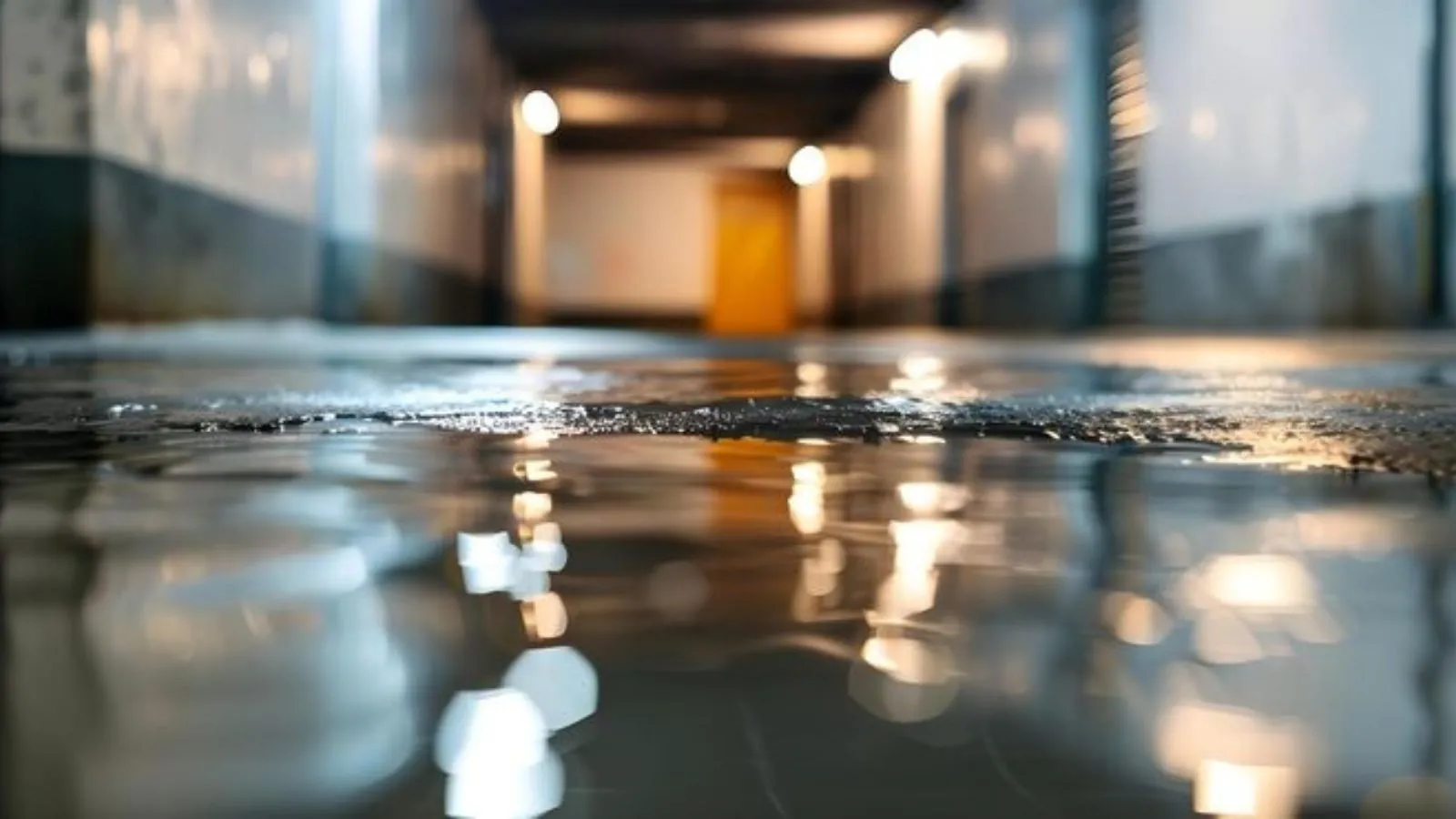
Flood damage restoration is the removal of rising surface water, mud and contaminated moisture from a building, followed by cleaning, drying and repair. If water has entered your Blue Springs home from rain, a stream or a storm sewer, treat it as an emergency, call the 24/7 line, stay out of the water and leave the electrical panel alone if it is wet. Photograph everything from a dry place before you touch it.
Flood water differs from a pipe leak because it carries soil, bacteria and debris. Under the ANSI/IICRC S500 categories, surface flood water is generally treated as Category 3 contaminated water, which changes what can be saved and how crews protect themselves.
Flood emergency: what comes first
Safety comes before cleanup. These steps protect people and keep options open for the claim.
Stay out of moving water
Flowing or deep water hides hazards. Do not drive or walk through flooded streets, and keep children and pets away from the water.
Cut power only from a dry spot
If the breaker box is dry and reachable, shut off the main breaker. If it is wet or you must stand in water, call the electric utility or 911.
Photograph from the doorway
Capture the waterline, damaged contents and any visible source. These photos support insurance and FEMA assistance requests.
Call the restoration line
Describe depth, how long it has been there and what it touched. Crews plan pumps, protective gear and disposal from your answers.
Check your flood risk and your policy
The City of Blue Springs regulates building in floodplains through section 408.010 of its Unified Development Code, which defines floodway and floodway fringe overlay districts. To see whether a specific address is mapped, use the FEMA Flood Map Service Center at msc.fema.gov or ask the city's Community Development office at City Hall on West Main Street. A building in or near a mapped area faces different rules for repairs and rebuilding.
Standard homeowners policies generally exclude flood, according to the Missouri Department of Commerce and Insurance, and separate flood coverage is sold through the National Flood Insurance Program and private insurers. FEMA notes that new NFIP policies typically carry a 30 day waiting period, so coverage bought during a storm warning usually comes too late. Check your policy before assuming anything.
How flood cleanup proceeds
Crews begin with extraction using submersible pumps and wet vacuums, then remove mud and debris. Porous materials such as carpet, pad, insulation and soaked drywall that touched flood water are usually discarded, since they cannot be reliably cleaned. Hard surfaces are cleaned and treated with an antimicrobial and then dried.
Drying uses air movers and dehumidifiers guided by moisture readings, and the structure is checked again before rebuilding begins. The structural drying page explains that process, and the basement water damage page covers the case where the flood entered below grade.
| Material | Usually after flood water | Why. |
|---|---|---|
| Carpet and pad | Removed and discarded | Contaminated and nearly impossible to clean fully. |
| Drywall and insulation | Cut out above the waterline | Porous, holds contamination and mold risk. |
| Solid wood and framing | Cleaned and dried in place | Can be dried and treated if caught early. |
| Tile, concrete and sealed surfaces | Cleaned, treated and dried | Non-porous and often salvageable. |
Flood water in the house?
Call, describe what you see and follow the safety steps. Crews will plan from that.
Call (816) 575-8173Flood damage in Blue Springs and nearby towns
FEMA's flood study for Jackson County lists the city under community number 290169. Some low spots and creek corridors are mapped, but flooding in the Kansas City metro also comes from storm sewer overflow and sheet runoff that a map may not show. A US Geological Survey study of the East Fork Little Blue River in Lees Summit shows how communities along these streams are tracked for flood inundation.
Crews dispatch across ZIP codes 64013, 64014 and 64015 and to Independence and Buckner, so a call from just across the city line is routine. For rain that comes through a roof or siding instead of rising from the ground, the storm water damage page is the closer match.
What affects the cost of flood cleanup
Flood loss is priced from conditions that must be seen in person.
- Water depth and how long it stayed.
- Category 3 handling, protective gear and disposal.
- How much carpet, pad, drywall and insulation must be removed.
- Whether a basement or crawl space was involved.
- Drying duration and equipment.
Want your real number? Call (816) 575-8173. Scope and price are explained before work starts.
Contractors after a flood
Large events attract out-of-town contractors who collect deposits and disappear. The Missouri Attorney General advises getting two or three bids, checking credentials and complaints, and getting every promise in writing. Never pay in full before work is done, and be wary of anyone who knocks on the door offering immediate repairs.
Flood cleanup questions
Yes. Floods often happen during overnight storms, and the 24/7 line takes flood calls at any hour. Same-day response is offered when crews are available.
Standard homeowners policies generally do not cover flood, according to the Missouri Department of Commerce and Insurance. Separate flood insurance may apply, so check your policy and call your agent.
Usually not. Carpet and pad that touched flood water are generally discarded because they cannot be reliably cleaned. Hard flooring and framing are more often saved.
Not while the structure is wet, the power is unsafe or sewage is present. Leave if the electrical panel is wet and follow local emergency guidance.