
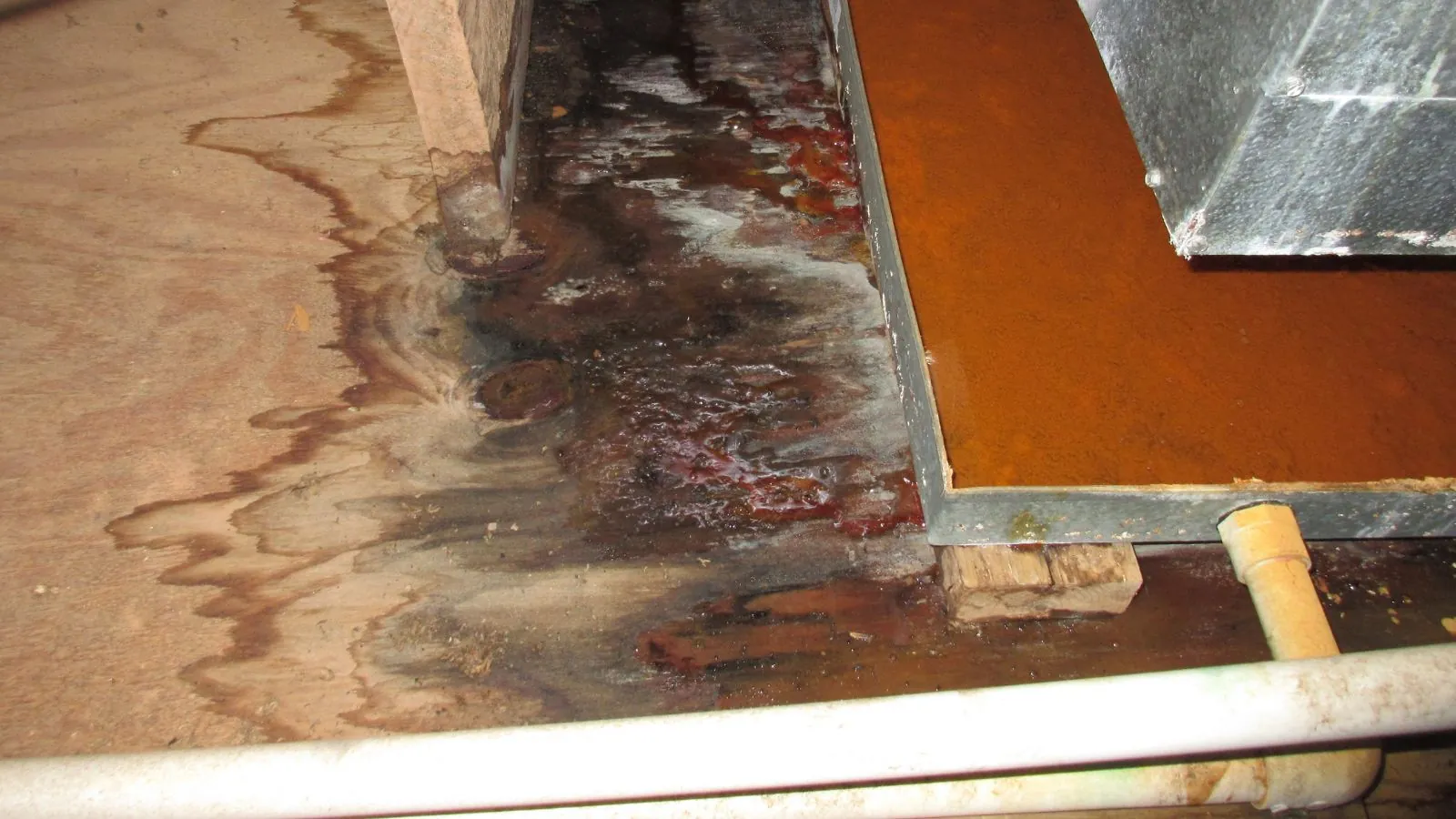
Hardwood floor water damage repair is the drying, assessment and replacement of wood flooring after water exposure. In Blue Springs, a leak from an appliance, pipe or storm can leave boards cupped, crowned or stained. Call early, because boards that are dried within days often settle back, while boards left wet can split or grow mold.
Wood swells as it absorbs water, and the edges of each board press against its neighbors. That pressure is what lifts a floor into waves or cups the edges upward.
What the damage looks like
- Cupping, where board edges rise higher than the centers..
- Crowning, where the center rises after a cupped floor was sanded too early..
- Buckling, where boards lift away from the subfloor..
- Dark stains or black marks that suggest long exposure or mold..
- Gaps between boards after drying..
Can the floor be saved?
It depends on the flooring type, how long it stayed wet and the water category. Solid hardwood often recovers if drying starts quickly. Engineered flooring and laminate are layered and often delaminate once soaked. Clean water gives the best odds, and contaminated water means removal.
Moisture readings guide the decision. Crews compare readings in the flooring with a dry reference, and they may use special drying mats to pull water from beneath boards. The structural drying page explains the equipment.
| Flooring type | Typical outcome if dried fast | Typical outcome if left wet. |
|---|---|---|
| Solid hardwood | Often settles after controlled drying | Cupping, buckling or replacement. |
| Engineered hardwood | Sometimes dried, sometimes replaced | Layers separate, usually replaced. |
| Laminate | Rarely recovers if soaked | Swells and is replaced. |
| Bamboo or strand woven | Case by case | Often replaced. |
Boards lifting or cupping?
Call, describe the flooring and when it got wet. Crews take readings before deciding.
Call (816) 575-8173Why you should wait before sanding
Sanding a cupped floor before it reaches normal moisture can leave it crowned once it dries. Wait until readings are stable, then judge whether refinishing is enough. Crews document readings so a flooring contractor can start with confidence.
If water came from an appliance, the appliance leak page covers the source. If it came from above, see the ceiling repair page.
Hardwood in Blue Springs homes
Many Blue Springs homes have hardwood in entries, kitchens and main living areas, and some have it over basements or crawl spaces where moisture moves up from below. Humidity in the Kansas City area swings seasonally, which can cause minor movement even without a leak. A leak is different, and it is shown by localized cupping near a water source.
Crews cover ZIP codes 64013, 64014 and 64015 and neighbors such as Oak Grove.
How crews dry a hardwood floor
The aim is to pull water out slowly and evenly. Fast drying can split boards, so crews often use mats that draw moisture through the surface along with controlled air movement and dehumidification. They tent the area when needed to isolate it from the rest of the house and to focus the dry air on the floor.
Readings are taken at the same spots on each visit. When those readings flatten out near the dry reference, drying is done. Then the floor is allowed to acclimate before anyone sands or refinishes it.
Questions to ask a flooring contractor
- What were the moisture readings when drying finished?.
- Does the subfloor read dry, not just the boards?.
- Can the existing finish be matched if only part of the floor is replaced?.
- Will gaps between boards close after the floor settles?.
- What does the floor warranty cover after water exposure?.
A reputable flooring contractor will wait for stable readings. Pressure to sand before the floor is dry is a warning sign.
The ANSI/IICRC S500 standard covers drying wood flooring and the readings used to judge it, and the EPA guidelines advise drying within 24 to 48 hours where possible.
What to do before help arrives
- Stay off wet boards that may be slippery or loose..
- Blot standing water with towels..
- Move furniture and rugs off the floor..
- Run a dehumidifier but avoid heat that could split boards..
What shapes cost
Floor costs depend on how many boards are affected and whether refinishing follows.
- Square feet of affected flooring.
- Solid, engineered or laminate construction.
- Days of drying equipment.
- Whether boards are replaced or sanded and refinished.
- Matching existing stain and finish.
Want your real number? Call (816) 575-8173. Scope and price are explained before work starts.
Insurance
Sudden water damage to floors is often covered while slow seepage is often excluded. Photograph the floor before work begins and keep the readings from drying.
Hardwood floor questions
Often, if it dries slowly and fully. Wait for stable moisture readings before judging whether to sand.
Usually after drying finishes, often several days to weeks for dense wood.
Not usually. Removal can damage boards that could dry in place. Ask crews first.
That suggests long exposure and possible mold. The floor likely needs removal and the area cleaned.