
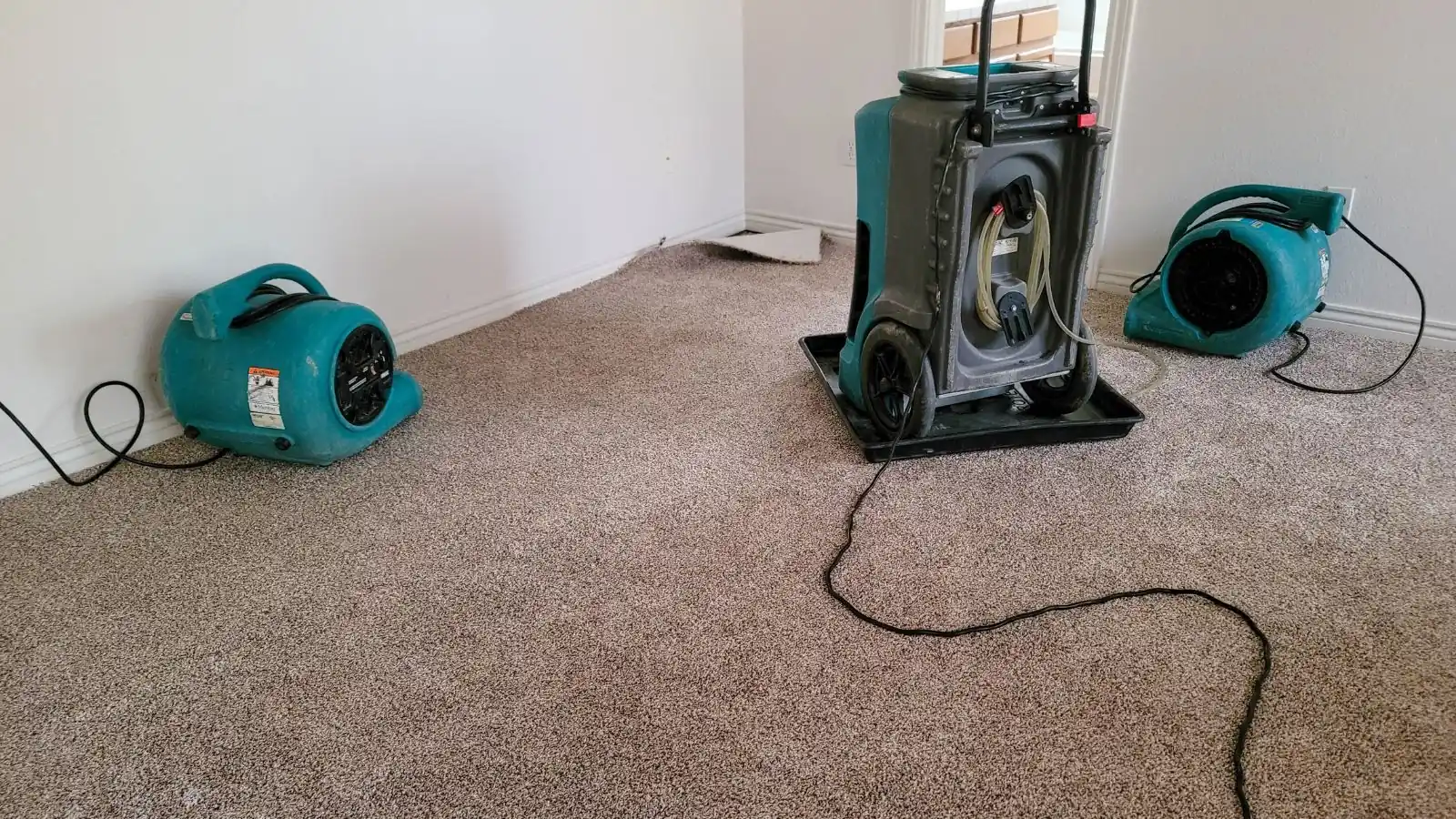
Carpet water damage restoration is the extraction, cleaning and drying of carpet and pad after a leak or flood. In Blue Springs, wet carpet is common after appliance failures, pipe leaks and storms. Call quickly and stay off the wet carpet, because walking on it presses water into the pad and subfloor.
Carpet sits on a cushion of pad, which acts like a sponge. Even after the surface feels dry, the pad and the subfloor under it can remain soaked.
Can the carpet be saved?
It depends on the water category and how long the carpet stayed wet. Carpet soaked by clean water for a short time can often be extracted and dried in place. Carpet touched by sewage or flood water is usually removed. The EPA notes that porous materials like carpet may need to be discarded when mold has begun.
Pad is cheaper to replace than to dry, so it is often removed even when the carpet is kept. Crews lift the carpet, remove the pad and dry the subfloor, then reinstall the carpet on new pad.
| Situation | Likely approach | Why. |
|---|---|---|
| Clean water, caught within a day | Extract and dry carpet, replace pad | Carpet fibers tolerate clean water. |
| Clean water, wet for several days | Remove carpet and pad | Mold risk rises. |
| Sewage or flood water | Remove and discard | Contaminated, hard to disinfect. |
| Glued-down commercial carpet | Often dried or replaced in sections | Depends on adhesive and backing. |
Carpet squishy underfoot?
Call, describe where the water came from and how long it has been wet.
Call (816) 575-8173What the process involves
Crews extract water with weighted tools, lift carpet edges to remove or dry pad, and set air movers and dehumidifiers under the ANSI/IICRC S500 standard. Subfloor readings confirm dryness before carpet goes back down. The water extraction page covers the first step.
Carpet that stays wet can develop odor and mold within days. The mold remediation page explains what follows if growth appears.
Carpet water damage in Blue Springs
Bedrooms, basements and living rooms across Blue Springs are often carpeted, and many leaks begin above them. A ceiling leak that drips onto carpet is covered by the ceiling repair page, and a basement seep is covered by the basement page.
Crews cover ZIP codes 64013, 64014 and 64015 and neighbors such as Independence.
What to do before crews arrive
- Stay off wet carpet, since walking presses water into the pad..
- Lift furniture legs onto foil or blocks, or move furniture off the carpet..
- Remove small items, rugs and anything that can bleed dye onto the carpet..
- Turn up the heat a little and run the air conditioner if it helps, but do not rely on fans alone..
- Photograph the area before extraction begins..
Carpet types and how they react
Synthetic fibers such as nylon and polyester tolerate clean water better than natural fibers like wool. Jute and some natural backings can shrink or stain. Berber loops hold water in the pile. Tackless strips along the edges, which hold the carpet to the floor, can rust or rot if they stay wet.
Crews check the backing and the tack strip, and they know when to lift the carpet entirely. A carpet that can be stretched back into place after drying often saves the cost of new material, but ask about the condition of the seams.
Odor after drying
A lingering smell usually means moisture remains in the pad or subfloor, or that the water carried contamination. Cleaning the surface will not fix it. Ask for readings of the subfloor and the pad area and consider replacing the pad if it was wet longer than a day or two.
What shapes cost
Carpet jobs depend on area and whether pad and carpet are replaced.
- Square feet of wet carpet.
- Water category.
- Pad replacement and carpet reinstall.
- Subfloor drying days.
- Odor treatment if needed.
Want your real number? Call (816) 575-8173. Scope and price are explained before work starts.
Insurance
Carpet losses from sudden leaks are often covered, and age of the carpet can affect payment. Photograph the carpet before anything is removed and keep a swatch if the insurer asks.
Carpet water damage questions
Within 24 to 48 hours if possible, since mold can follow if carpet stays wet.
Usually yes. Pad holds water and is inexpensive compared with the risk of mold.
Cleaning is not drying. Extract and dry first, then clean if needed.
Residual moisture or contamination. Ask crews to check the pad and subfloor.