
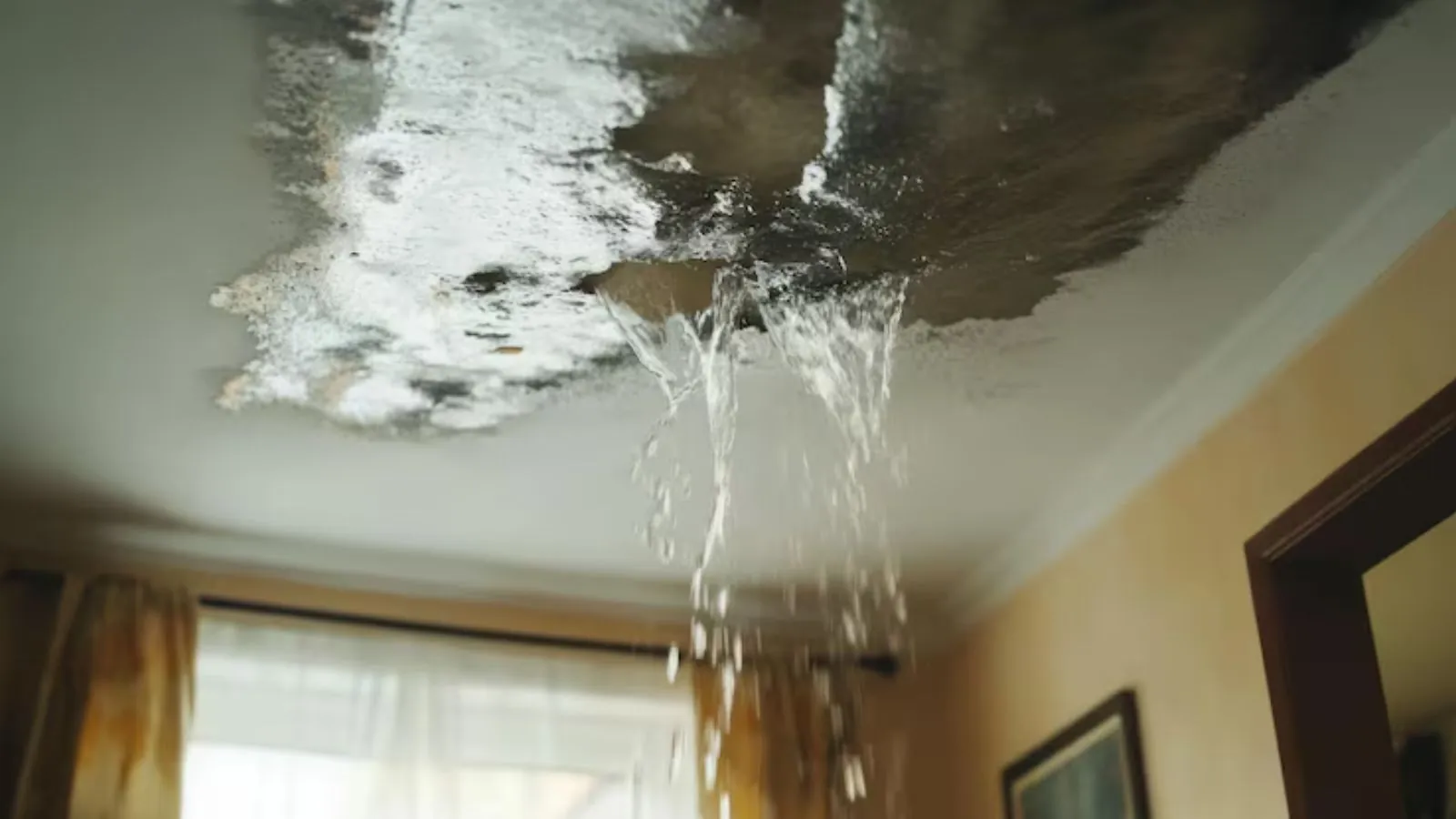
Ceiling water damage repair removes wet drywall and insulation, dries the framing above, fixes the finish and resolves what let the water in. If a ceiling in your Blue Springs home is sagging, dripping or showing a spreading brown stain, treat it as an emergency, keep people and furniture out from under it and call the 24/7 line. A bulge holds a lot of water, and it can drop all at once.
While you wait, poke a small hole at the lowest point of a bulge with a screwdriver and catch the water in a bucket, only if you are not standing under a heavy section and no lighting or electrical is nearby. This relieves weight, and a small hole is far easier to patch than a collapsed ceiling.
Ceiling emergency: first steps
- Move people, pets and furniture away from the wet area..
- Turn off power to the room at the breaker if the box is dry and reachable..
- Do not use ceiling fans or light fixtures that are wet or dripping..
- Place buckets and plastic sheeting, and photograph the stain from several angles..
Find the source before you patch
A stain is only a symptom. The source may be a roof leak, a failed bathroom supply line or drain upstairs, a condensate overflow from air handling equipment or a plumbing leak in the attic. Painting over the stain without finding the source usually brings it back in weeks.
Water travels along framing before it shows, so the stain is often several feet from the real opening. Moisture meters and thermal imaging help trace the wet path, which saves removing more ceiling than necessary.
Roof leaks that end up in the ceiling
A roof leak is the most common outside source, and it has no page of its own on this site because the repair target is the same finished ceiling. Wind-driven rain through damaged shingles, lifted flashing or cracked vents wets decking and insulation before it reaches drywall. The roofer repairs the roof, and restoration crews dry and rebuild what was wet.
After storms in the Kansas City area, many homeowners find stains in the days that follow. Look for staining that follows a rain, not a plumbing event, and check the attic for damp insulation. The storm water damage page covers the wider envelope and wind-driven rain issues.
| Stain pattern | Likely source | Next step. |
|---|---|---|
| Ring appears after rain | Roof or flashing leak | Call a roofer, dry ceiling and insulation. |
| Stain beneath a bathroom | Supply, drain or tub overflow above | Shut off water to that fixture, call a plumber. |
| Drip near an air handler or vent | Condensate line or duct sweating | Check the drain pan, see the AC leak page. |
| Stain shows in cold weather thaw | Frozen pipe or ice dam melt | Shut off the main, see the frozen pipe page. |
Repair steps
Wet drywall that sags, stains through or smells musty is cut out in clean sections, and wet insulation is removed. Framing is dried with air movers and dehumidifiers until readings return to normal. Patching, texture and paint come after the structure is dry.
Small stains on dry drywall can sometimes be sealed and painted once the source is fixed and the area is confirmed dry. Large stains, sagging or any sign of mold call for cutting open the ceiling. The wall and drywall repair page describes the finish work shared by walls and ceilings.
Ceiling sagging or dripping now?
Call the 24/7 line and describe the stain, the weather and what is above it.
Call (816) 575-8173Ceilings in Blue Springs homes
Blue Springs homes range from older houses near Downtown to newer two-story homes in subdivisions such as Stonecreek and Waterfield. Two-story homes with upstairs bathrooms see more supply and drain leaks into ceilings, while single-story roofs show more weather leaks. The City's Community Development office at City Hall on West Main Street handles permits if repairs involve structural work.
Crews cover ZIP codes 64013, 64014 and 64015 and come from nearby towns such as Greenwood when the call is after hours. If a roof or ceiling collapse is involved, keep people out until the area is cleared.
Drying and removal decisions follow the ANSI/IICRC S500 standard for professional water damage restoration, which sets water categories and drying goals.
What shapes the cost of ceiling repair
Cost depends on the source and the size of the wet area.
- Size of the stained or sagging area.
- Whether insulation is wet and must be replaced.
- Ceiling texture and paint matching.
- Number of rooms affected.
- Whether the source is fixed and structural drying is needed.
Want your real number? Call (816) 575-8173. Scope and price are explained before work starts.
Insurance
Sudden roof damage from a storm or a sudden pipe failure is often covered in many policies, while long-term seepage and wear generally are not. Ask your insurer what applies and whether a roof inspection is required. Keep photos and the roofer's or plumber's invoice.
Ceiling water damage questions
Yes. Ceiling leaks often show up during or after storms, and the 24/7 line takes these calls at any hour. Same-day response is offered when crews are available.
Only if the source is fixed and the area is confirmed dry. Otherwise the stain returns and moisture may remain in the drywall and insulation.
Yes. Wet drywall is heavy and can fall without warning. Keep people out from under it and relieve water only if you can do it safely.
A roofer repairs the leak. Restoration crews handle the wet ceiling, insulation and framing. Coordinate both so drying starts promptly.