
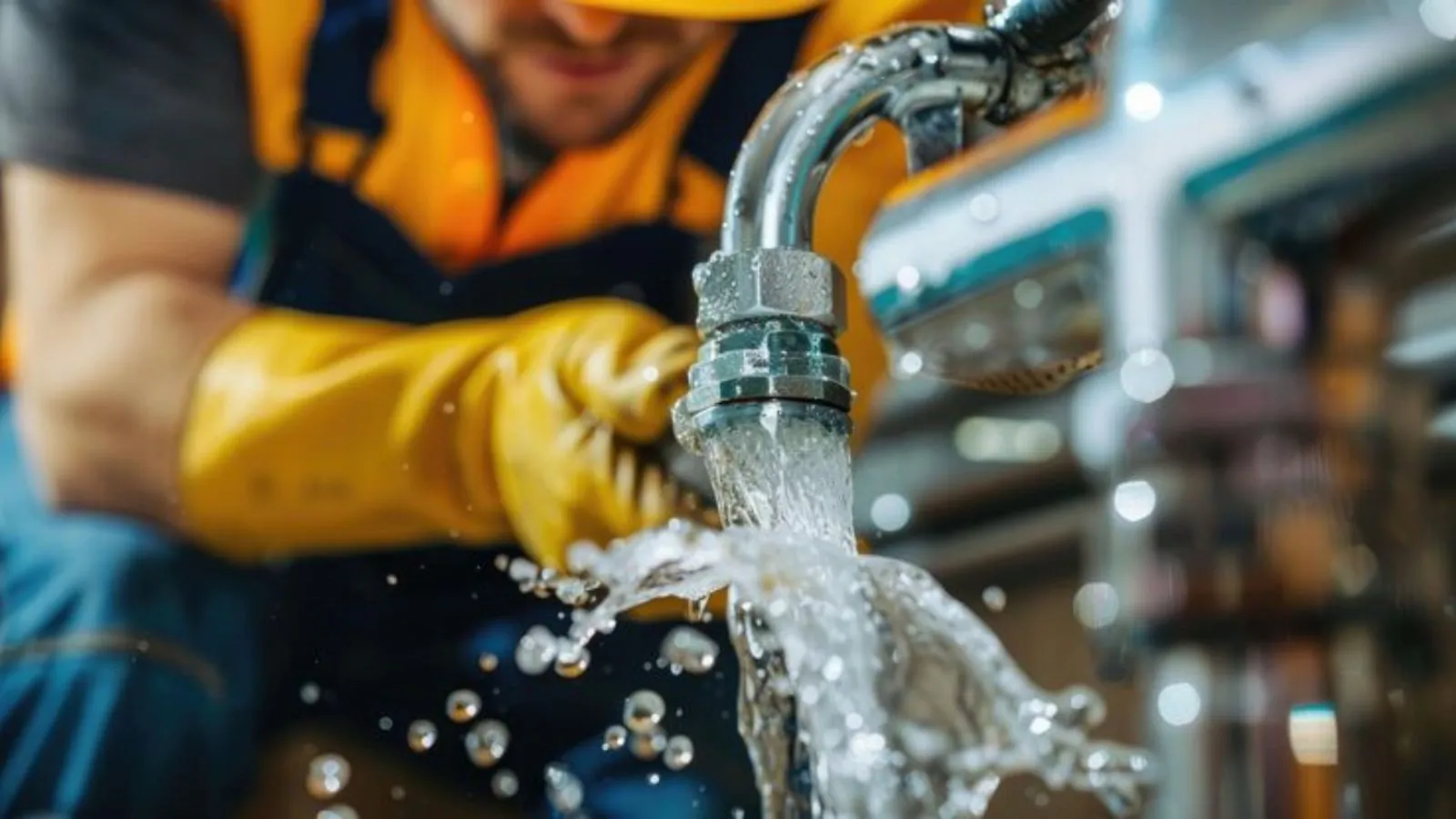
Burst pipe water damage is the flooding, soaking and structural wetting caused when a pressurized water line splits or separates. Treat it as an emergency in Blue Springs at any hour. The 24/7 line is staffed, so call after you shut the water off at the main valve, switch off power to wet rooms only if you can do it from a dry spot, and move rugs and electronics off the floor.
A pressurized supply line can release several gallons a minute. Unlike a slow drip, a burst saturates drywall, insulation and flooring in a single afternoon, and the water often runs down inside the wall into the level below.
What to do in the first few minutes
These steps buy time for the building. Do them in order and skip any that put you near live electricity or standing water.
Find the main shutoff
The main valve is usually where the water line enters the house, often near the water heater, a basement wall or an interior closet. Turn it clockwise until it stops.
Open a low faucet
After shutting the main, open the lowest faucet in the house to drain what remains in the pipes. This reduces the pressure still pushing water out of the break.
Protect the electrical
Leave wet outlets and the panel alone if you must stand in water to reach them. Call the electric utility or 911 when water is near the panel.
Photograph and lift
Take photos of the break and the wet areas before anything moves. Lift furniture legs onto blocks and move paper and electronics to a dry room.
Why the water is rarely where the pipe is
A split in an upstairs bathroom line can show up as a ceiling stain in the kitchen. A break inside an exterior wall can send water under the baseboard and into the slab edge. Crews follow the water with moisture meters and thermal cameras rather than guessing from the stain, because the wet area is usually bigger than the visible one.
That mapping step is why a quick wipe-up is rarely enough after a burst. Once the wet zones are marked, extraction, controlled removal of wet drywall or insulation, and air movers and dehumidifiers follow the ANSI/IICRC S500 drying approach.
| Where the pipe broke | Where the water usually travels | What gets checked. |
|---|---|---|
| Inside an interior wall | Down the cavity to the floor below | Wall cavity, baseboard, ceiling under the wall. |
| Under a sink or at a fixture | Into cabinet bases and along the floor | Cabinet floor, adjacent flooring, subfloor edge. |
| In the attic or ceiling space | Through insulation and down onto drywall | Ceiling, attic insulation, light fixtures. |
| At a basement or crawl space line | Onto the floor and into joists | Joists, insulation, finished basement walls. |
Cleanup, drying and what gets removed
Clean supply water starts as the least hazardous category. That changes if it sits, so speed matters. Wet insulation and soaked drywall are cut out when they cannot be dried in place, and wet carpet pad is usually discarded. Hardwood and subfloor often can be dried if the water is removed quickly.
The point of controlled demolition is access. Opening a few feet of wall lets air reach framing that would otherwise stay wet for weeks. The wall and drywall repair page describes how those openings are patched afterward, and the kitchen water damage page covers the cabinet and sink-area case.
Pipe still leaking or floor still wet?
Tell the dispatcher where the water entered, where it went and whether the valve is shut. A plan is built from that.
Call (816) 575-8173Burst pipes in Blue Springs: what is local
The City of Blue Springs runs its own water and sewer service. If the break is on the street side of the meter, the city is the one to call, and a plumber handles the house side. NWS Kansas City normals for 1991 to 2020 put the typical late January low near 20 degrees Fahrenheit, so a hard freeze can burst a line in an exterior wall. The frozen pipe page covers the thaw-and-split case.
Burst pipes in warm months more often come from age, corrosion, pressure spikes or a failed fitting. The result is the same: water in the structure that needs removal and drying. Crews serve homes across ZIP codes 64013, 64014 and 64015 and nearby Lees Summit.
What changes the cost of burst pipe cleanup
Cleanup after a burst depends on a handful of facts that can only be confirmed on site.
- How long the water ran before the valve was shut.
- How many rooms and floor levels the water reached.
- Whether insulation, drywall or subfloor must be opened and removed.
- Flooring type, since hardwood and carpet behave differently.
- How many days of air movers and dehumidifiers the structure needs.
Want your real number? Call (816) 575-8173. Scope and price are explained before work starts.
Insurance for a burst pipe
Sudden and accidental discharge from plumbing is the kind of loss many homeowners policies are written to cover, though terms differ. Gradual leaks, long neglect and the cost to repair the pipe itself are often treated differently. Read your policy or call your insurer, and ask what documentation it wants before cleanup begins.
Keep the broken section of pipe if the plumber removes it, and keep photos of the wet areas and the receipts. The Missouri Department of Commerce and Insurance publishes consumer guidance on claims at insurance.mo.gov.
Burst pipe questions
Yes. The 24/7 line takes burst pipe calls at any hour, and same-day response is offered when crews are available. Shut the main valve and keep clear of wet electrical equipment while the dispatcher plans the visit.
Many policies cover sudden and accidental water damage, but coverage varies and some exclusions apply. Check your policy or ask your insurer, and document the loss with photos before cleanup.
The EPA says to dry water-damaged areas and items within 24 to 48 hours to prevent mold growth. That is why extraction and drying start as soon as possible after the water is stopped.
Both, in order. Stop the water with the main valve, call a plumber to repair the pipe and call the restoration line to remove water and dry the structure. They can be arranged the same day.