
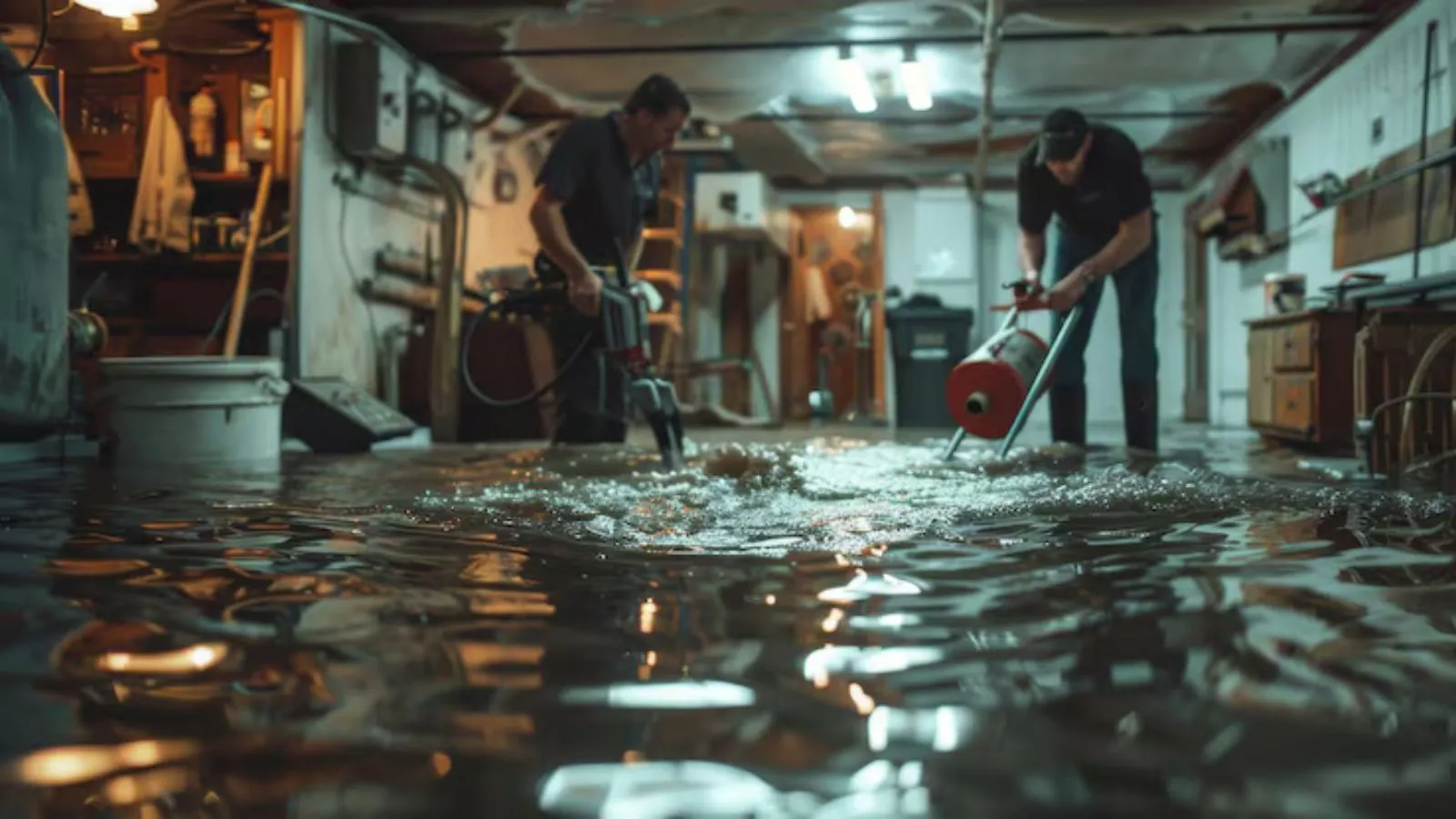
Basement water damage cleanup is the removal and drying of water from a below-grade level, along with the carpet, drywall and belongings it reached. If your Blue Springs basement is taking on water, treat it as an emergency, stay out of standing water near outlets and the panel, and call the 24/7 line. Water in a basement can be deeper and more hazardous than it looks.
Basements sit below the rest of the home, so water that gets in stays there until it is pumped out. Finished walls, carpet and storage boxes soak quickly.
Is it safe to go downstairs?
Check from the stairs before stepping into a wet basement.
Look for outlets
If water reaches outlets, cords or the electrical panel, stay out and call the electric utility or 911.
Judge the depth
Deep water hides hazards and can contain contamination. Do not wade in without knowing the source.
Check for gas
If you smell gas, leave the house and call the gas utility.
Photograph from above
Take photos from the stairs, then call for pump-out.
Where basement water comes from
Water enters through foundation cracks, window wells, floor drains, sump failures, supply pipe breaks or sewer backups. The source decides the cleanup. A pipe break is clean water, while a sewer backup is contaminated and is covered on the sewage backup page.
Groundwater after heavy rain is common in the Kansas City area, and it often rises through the floor-wall joint. Fixing grading, gutters and sump systems is a separate job from cleanup and belongs with a specialist.
| Source | Typical sign | Next step. |
|---|---|---|
| Foundation crack or wall seep | Water along a wall after rain | Pump out, dry and consult a waterproofing specialist. |
| Window well | Water below a basement window | Clear drainage and dry the wall. |
| Failed sump pump | Water rising near the pit | Replace the pump and extract. |
| Supply line break | Water spraying or constant flow | Shut main valve, then extract. |
| Drain or sewer backup | Dark water from floor drain | Treat as contaminated. |
Water in the basement now?
Stay out of deep water and call. Describe the depth and the source.
Call (816) 575-8173Cleanup and drying below grade
Crews use submersible pumps for depth, then extractors and wet vacuums. Wet carpet and pad are removed, drywall is cut above the wicking line if needed, and air movers and dehumidifiers run until readings meet the S500 targets. Basement humidity runs high, so dehumidification matters more here than in an upstairs room.
Mold risk is higher in basements. The EPA advises drying within 24 to 48 hours, and the mold remediation page explains what to do if growth has already started. A common question is whether cleanup fixes the leak. It does not, so ask a waterproofing specialist about causes honestly.
Basements in Blue Springs
Many Blue Springs homes have full or walkout basements, finished to varying degrees. The city's Unified Development Code sets floodplain overlay districts, and the FEMA Flood Map Service Center at msc.fema.gov shows whether your address is in a mapped flood hazard area. Surface flooding is usually excluded from homeowners policies, so ask your agent about flood coverage.
Crews cover ZIP codes 64013, 64014 and 64015 and neighbors such as Lees Summit. For rising surface water, the flood damage page adds detail.
Protecting belongings in a wet basement
Cardboard boxes wick water from the floor and fail quickly, so items stored in them are at risk. Move them to dry space on shelves or plastic bins when it is safe to do so. Photograph the contents before discarding anything, since an insurer may ask for a list.
Paper, photos and keepsakes can often be saved if they are handled soon. The National Archives suggests air-drying or freezing wet papers and photographs within two days, though freezing does not kill mold. Ask the dispatcher for handling tips when you call.
What to ask a waterproofing specialist
- Where is water entering, and how do you know?.
- What does the fix change, and what does it not?.
- Is the work permitted, and who handles the permit?.
- Is the estimate in writing, with the scope described?.
What shapes cost
Basement jobs depend on depth, finish level and source.
- Depth of water and square feet affected.
- Finished or unfinished space.
- Carpet, drywall and belongings involved.
- Water category.
- Drying days and rebuild work.
Want your real number? Call (816) 575-8173. Scope and price are explained before work starts.
Insurance
A sudden pipe break in a basement is often covered, while groundwater seepage and surface flooding are often excluded. The NFIP typically has a 30 day waiting period. Missouri's Department of Commerce and Insurance consumer line at 800-726-7390 can help with claim questions.
Basement water damage questions
Yes. Basement flooding often happens during overnight storms, and the 24/7 line is open at any hour. Same-day response is offered when crews are available.
No. Cleanup removes water and dries the space. Preventing repeats needs drainage, grading or sump work from a specialist, and you should be wary of anyone who promises otherwise.
Not if water reaches outlets, the panel or cords. Stay out and call the utility or 911.
Often several days, because basement humidity is high. Readings decide when it is dry.