
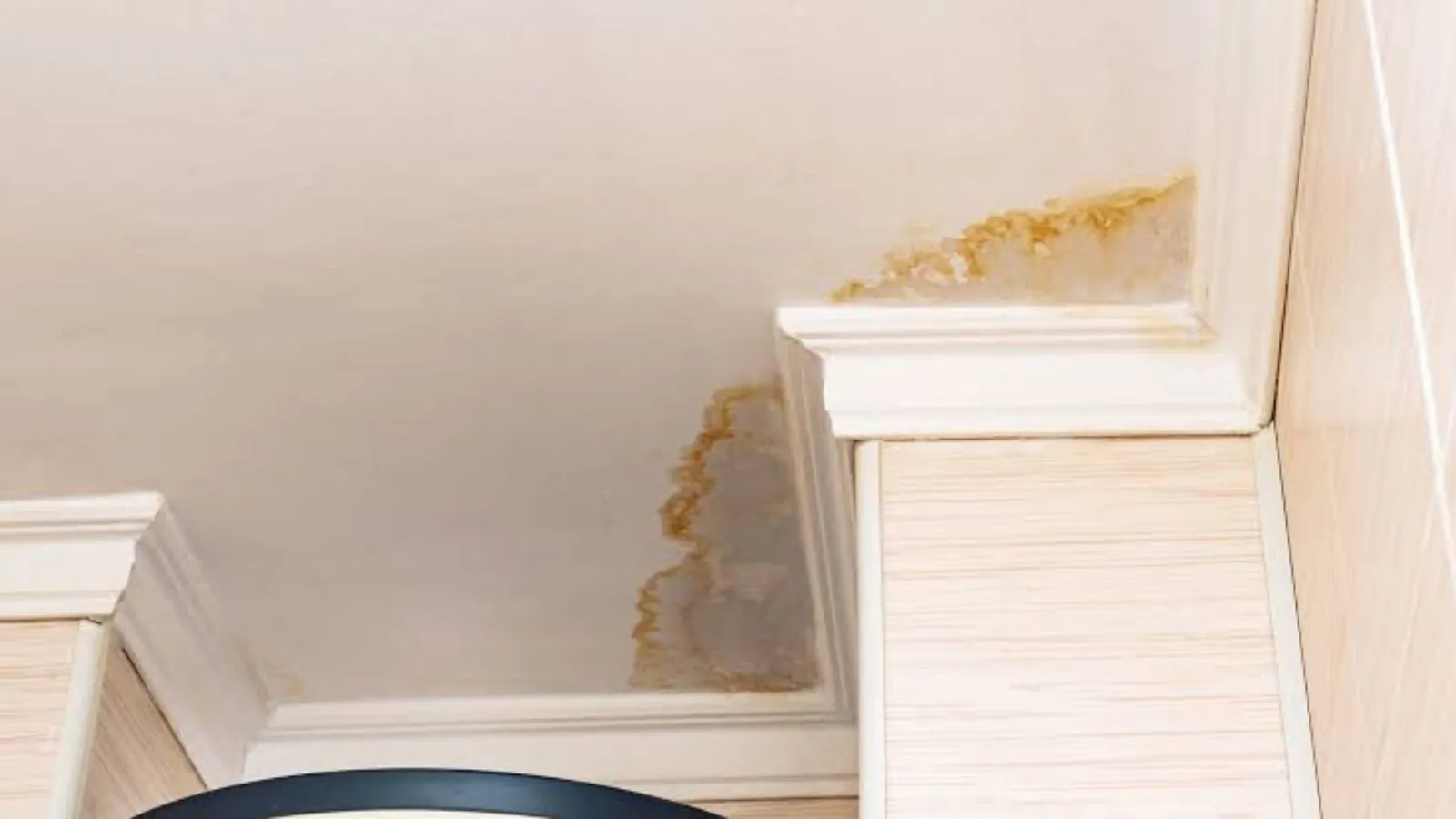
AC leak water damage is the wetting of ceilings, closets, floors and attic insulation by condensate or refrigerant-side moisture from air conditioning equipment. In Blue Springs, the cooling season runs for months, so a clogged drain can leak almost daily. Turn the system off at the thermostat when you find a leak, because running it makes more water.
Air conditioners remove humidity from the air and send it out through a condensate drain line to a drain, a pump or the outdoors. When the line clogs or the pan rusts through, that water goes into the building instead.
How condensate leaks happen
A drain line clogs with algae and sludge over a season. A primary pan under an air handler cracks or rusts. A secondary pan with a float switch is a backup that shuts the system down when water rises. A cracked pump or a disconnected line produces similar leaks.
The leak shows up at the lowest convenient point. Air handlers in attics drip onto ceilings. Closet furnaces drip onto flooring. Systems in crawl spaces and basements leak onto insulation or concrete where it can go unnoticed for weeks.
First steps if you see water
- Set the thermostat to off so the unit stops making condensate..
- Turn off power to the air handler at its breaker if you can reach it safely..
- Check the visible drain pan and line. Water standing in the pan means the line is blocked..
- Call an HVAC technician to clear the line, and call restoration if drywall, flooring or insulation is wet..
| Where the leak shows | What probably happened | What dries or gets replaced. |
|---|---|---|
| Ceiling below an attic unit | Pan overflow or clogged drain | Ceiling drywall and attic insulation. |
| Closet floor and wall base | Closet furnace drain overflow | Flooring, baseboard and wall base. |
| Basement unit and nearby wall | Pump failure or disconnected drain | Insulation, drywall, flooring edge. |
| Floor near a window unit | Drain pan overflow or tilt | Flooring and baseboard. |
A ceiling or closet that stays damp breeds mold
Condensate is mostly clean water, which makes it a Category 1 source when fresh. But the pan and line grow slime, and a leak that goes on for weeks gives mold what it needs. The EPA advises drying wet materials within 24 to 48 hours, which is hard to meet when the leak is hidden.
If you smell mustiness near the unit, the mold remediation page explains testing and cleanup steps after the leak is fixed. Fix the leak first, because mold remediation without a dry structure is wasted effort.
Floors damaged by an AC line
Hardwood and laminate near a leaking closet unit can cup or buckle. Moisture readings determine whether boards can be dried in place or must be replaced. See the hardwood floor page for how cupping is judged.
Carpet and pad near a leak are often saved if the water is clean and the leak was caught early. If they stayed wet for days, replacement is more likely.
Is the AC leak soaking a ceiling or floor?
Call, tell the dispatcher where the unit is and what looks wet. Crews trace and dry from there.
Call (816) 575-8173Why Blue Springs systems leak
Summers in the Kansas City area are humid, so cooling systems produce a lot of condensate. A line that clears in spring may clog by July. Annual service before the season is the best prevention, along with a float switch on the secondary pan. Attic and closet installations in newer homes toward Adams Dairy Parkway and Stonecreek can all be affected.
Crews cover ZIP codes 64013, 64014 and 64015 and serve neighbors such as Oak Grove. If a ceiling shows a stain, the ceiling repair page covers the finish work.
Professional drying follows the ANSI/IICRC S500 standard, and the EPA guidelines on moisture and mold say to fix the water problem first and dry wet materials within 24 to 48 hours.
What to do before help arrives
- Set the thermostat to off..
- Switch off the air handler at its breaker if you can reach it dry..
- Keep away from wet outlets and light fixtures..
- Place a bucket under a dripping ceiling and photograph the stain..
What affects the repair cost
AC leaks are cheaper to fix when caught early.
- How long the leak ran before it was noticed.
- Whether ceiling drywall or attic insulation must be replaced.
- Flooring type near the unit.
- Whether mold growth is present and needs separate treatment.
- Drying duration.
Want your real number? Call (816) 575-8173. Scope and price are explained before work starts.
Insurance
Condensate leaks that develop slowly are often excluded from coverage as maintenance issues, while a sudden failure may be covered. Check your policy or ask your insurer, and keep the technician's invoice that identifies the cause.
AC leak questions
Yes. If the water keeps wetting drywall, insulation or flooring, mold can follow. Dry the area within 24 to 48 hours when possible and fix the drain.
Yes. Set the thermostat to off so the unit stops creating condensate, then call an HVAC technician to clear the drain.
Some homeowners do with a wet vacuum on the drain end. If you are unsure, call a technician, since a wrong move can damage equipment.
Fresh condensate is relatively clean, but it can pick up slime from the pan and line. Dry the area fast.