
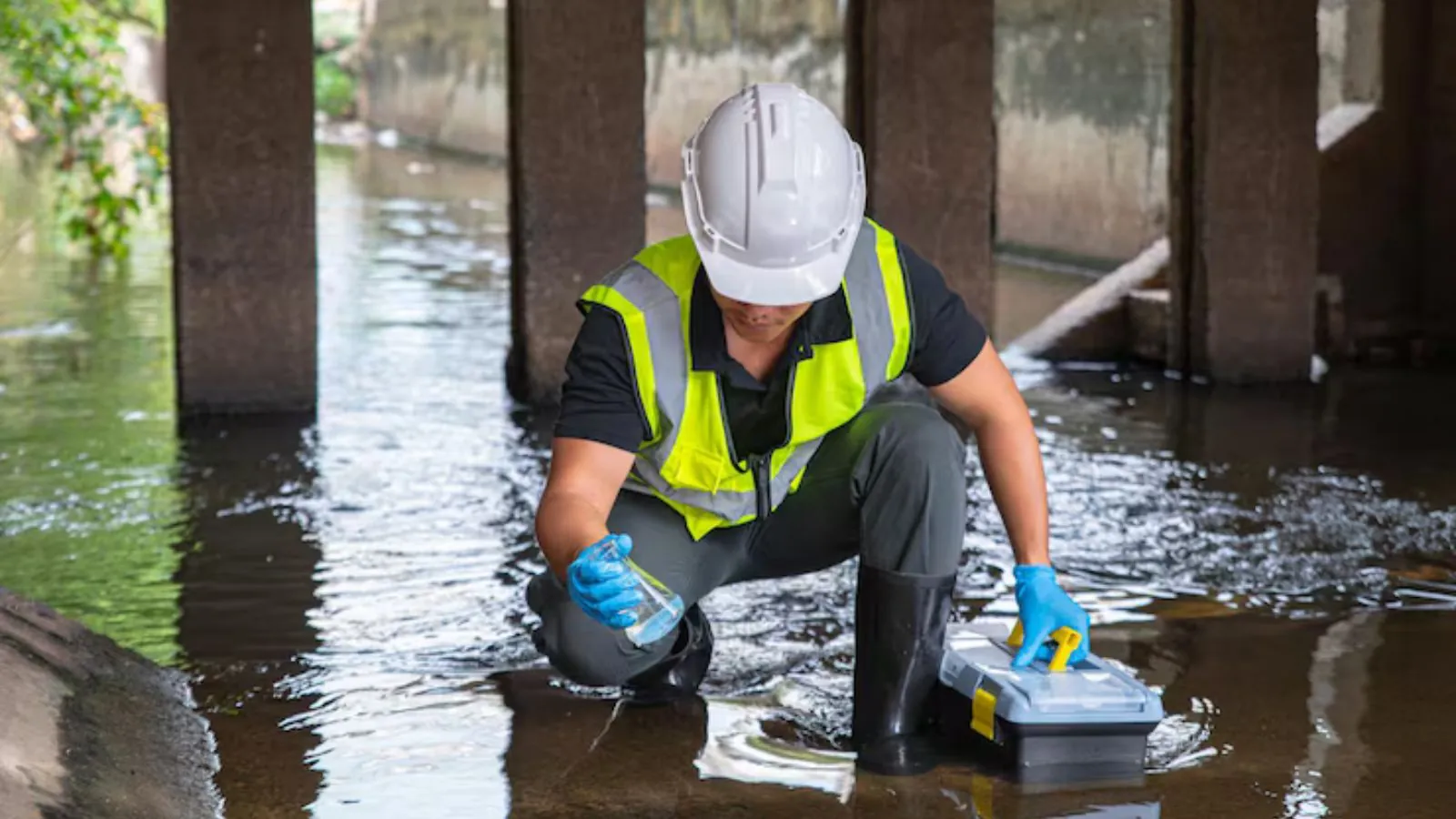
Sewage backup cleanup is the removal, disinfection and drying of a building after wastewater has flowed back through a toilet, tub, shower or floor drain. If this is happening in your Blue Springs home, stop running water, keep children and pets out of the area and call the 24/7 line. Do not try to clean it with a household mop, because the water is classed as Category 3 and carries contaminants.
Under the ANSI/IICRC S500 standard, Category 3 water is grossly contaminated. Porous materials it touches, such as carpet, pad and drywall, are usually removed rather than dried in place. That is a different job from clean-water extraction.
Why is sewage coming up through my drain?
Water and waste coming back up a drain means the line is blocked or overloaded somewhere downstream. The trade term for the cleanup is sewage backup remediation. The cause may be a clog inside your own line, tree roots in the lateral, a collapsed section or a heavy rain event that strains the public system.
A plumber clears or inspects the line, and cleanup crews handle what the backup touched. Both are needed. Cleaning without fixing the blockage only invites a repeat.
First steps before crews arrive
Keep this short and cautious. The goal is to limit exposure and stop adding water.
Stop adding water
Do not flush, run sinks, showers, dishwashers or washing machines. Each one sends more water into a line that cannot take it.
Keep people out
Close the door to the affected room. Keep children, pets and anyone with a weakened immune system away from the area.
Skip bare hands
If you must enter, wear boots and waterproof gloves. Wash hands afterward with soap and clean water.
Call both pros
Call the restoration line for cleanup and a plumber for the blockage. If the city line is suspected, call the City of Blue Springs.
| Material touched by sewage | Usual treatment | Why. |
|---|---|---|
| Carpet and pad | Removed and discarded | Porous and hard to disinfect. |
| Drywall and insulation | Cut out above the contact line | Absorbs contaminated water. |
| Tile, concrete and sealed surfaces | Cleaned and disinfected | Non-porous and cleanable. |
| Upholstered furniture | Usually discarded | Fabric and stuffing hold contaminants. |
| Solid wood and hard furnishings | Case by case cleaning | Depends on finish and exposure time. |
How the cleanup works
Crews wear protective equipment, contain the area and extract the liquid first. Then they remove contaminated porous materials, clean hard surfaces with an antimicrobial treatment and dry the space with air movers and dehumidifiers. Moisture readings confirm the structure has reached its drying goal.
The EPA notes that porous materials such as carpet may have to be thrown away after sewage or flood contact. A reputable company explains which of your materials are going and why before work begins. The structural drying page explains the final stage.
Sewage in your home?
Stay out, stop using water and call. Describe which drains are backing up.
Call (816) 575-8173Sewage backups in Blue Springs
The City of Blue Springs operates its own sewer system, and the Utility Billing office at City Hall on West Main Street is the contact point for city service questions. A backup that affects several neighbors points toward the public main, while a backup in only your home points toward your own lateral. Call the city if you suspect the public line.
Basements and lower levels are most exposed because drains sit below the main. Heavy rain can strain any sewer system, and a backwater valve installed by a plumber is one option to ask about. Crews serve ZIP codes 64013, 64014 and 64015 and nearby Independence and Buckner. If groundwater also entered, the basement page applies too.
What shapes sewage cleanup cost
Contamination raises the labor and disposal needed, so the scope depends on what the water reached.
- How far the sewage spread and how deep it was.
- Carpet, pad, drywall and insulation that must be removed.
- Disinfection and protective measures needed.
- Drying days and equipment.
- Rebuild work after demolition.
Want your real number? Call (816) 575-8173. Scope and price are explained before work starts.
Insurance
Many policies exclude sewer and drain backup unless a specific endorsement was added. Ask your agent whether your policy has water backup coverage. Photograph the damage and keep the plumber's report that identifies where the blockage was.
Missouri's Department of Commerce and Insurance offers consumer help at 800-726-7390 if a claim question comes up.
Sewage backup questions
Yes. Sewage backups are treated as urgent, and the 24/7 line takes calls at any hour. Same-day response is offered when crews are available.
A tiny spill on a hard floor can be cleaned with gloves, boots and a disinfectant. Anything that reached carpet, drywall or a larger area should be handled by trained crews.
Not necessarily. A clog, roots or a heavy storm can cause it. A plumber with a camera can find the cause.
Usually not. Porous materials that contact sewage are typically removed.