
Water damage restoration and remediation are often used as if they mean the same thing, and in daily conversation they largely do. In a scope of work, though, the words can signal different phases. Mitigation stops the loss, remediation removes and treats contamination or growth, and restoration returns the building to its prior condition. Knowing the vocabulary helps you compare proposals.
Terms vary between companies and insurers, so treat this as a common usage guide, not a legal definition. When in doubt, ask the company to describe the work in plain terms.
Mitigation: stop it from getting worse
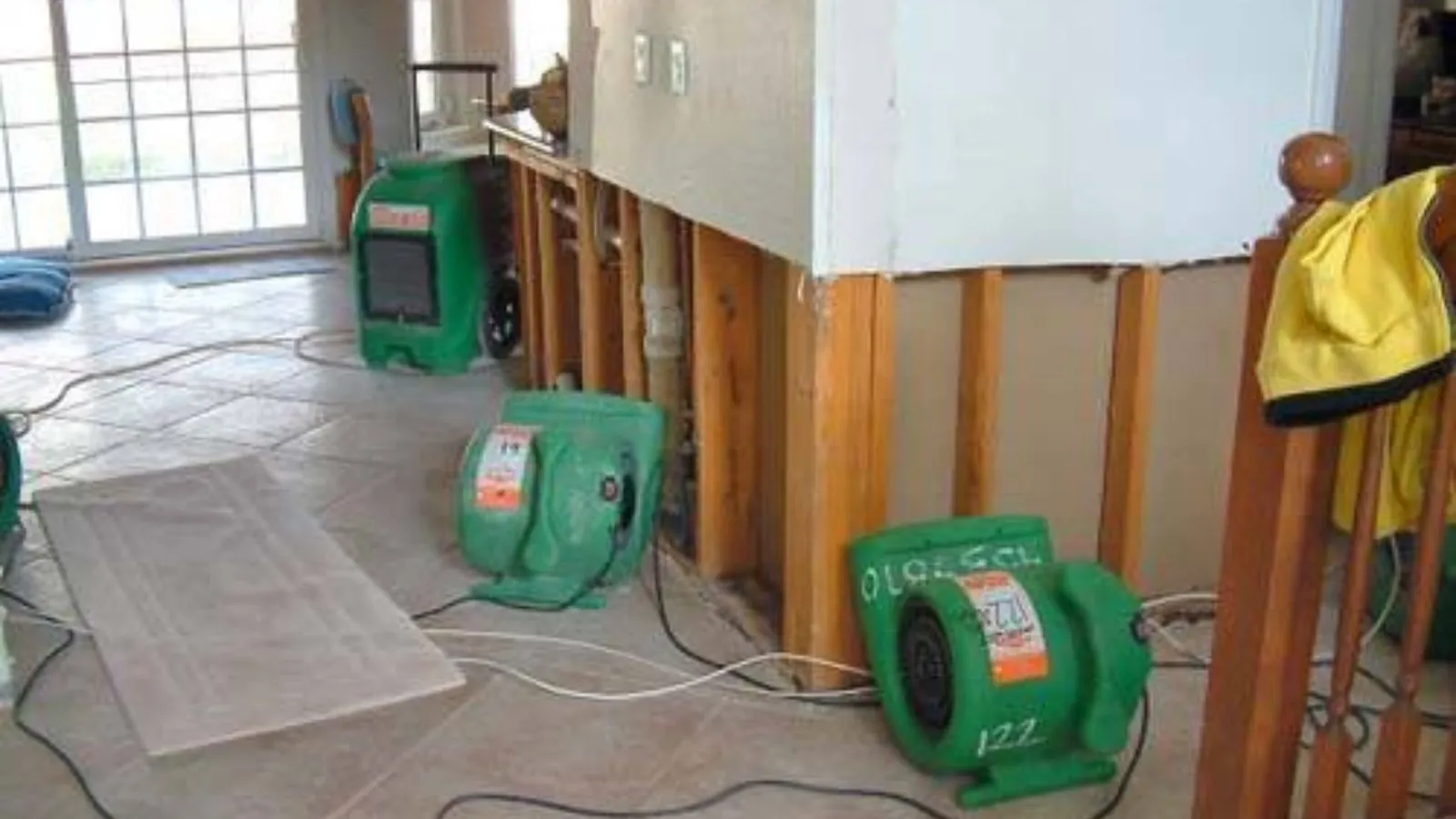
Mitigation is the emergency stage. It includes stopping the source, extracting standing water, removing wet materials that cannot dry and setting drying equipment. The goal is to limit further loss. Insurers often expect mitigation to start quickly.
The water extraction page and the structural drying page describe mitigation tasks in detail.
Remediation: deal with contamination or growth
Remediation usually means removing or treating something harmful, such as sewage, contaminated flood water or mold. It involves containment, removal of affected materials, cleaning and verification. Mold work follows the ANSI/IICRC S520 standard.
Remediation of mold, for example, is covered on the mold remediation page, and sewage is covered on the sewage backup page. When someone says remediation after a water loss, ask what is being remediated.
Restoration: put it back
Restoration returns the building to its condition before the loss. It can mean drying and cleaning, but it often also means rebuilding: new drywall, flooring, cabinets and paint. Some companies handle both mitigation and rebuild, while others do only mitigation and leave the rebuild to a contractor.
Ask who does what. A single company can simplify coordination, but a separate contractor can be a fair choice if you prefer to compare bids.
| Term | Usually means | Typical tasks. |
|---|---|---|
| Mitigation | Stopping further damage | Source control, extraction, drying setup. |
| Remediation | Removing or treating contamination or growth | Containment, removal, cleaning, verification. |
| Restoration | Returning the building to its prior state | Drying, cleaning and rebuild. |
| Reconstruction | Rebuilding after demolition | Drywall, flooring, paint, cabinets. |
Want the work explained in plain words?
Call and ask. A good dispatcher explains what each step does.
Call (816) 575-8173Why it matters on your estimate
If a proposal lists remediation and you have a clean water loss, ask why. Clean water jobs usually do not need containment and antimicrobial treatment. If a proposal lists only drying and you have mold, ask what happens to the growth. The label alone does not tell you whether the scope fits the problem.
A good scope names the materials, the quantities and the steps. Vague wording lets the label do the work that the line items should do.
Licensing and certification
Terms like certified and licensed vary. Licensing and training requirements differ by state and by trade, and individual technicians may hold training certificates. Ask what a company holds, ask for documents and verify them with the issuer. This site does not claim any certification on behalf of the firm.
Standards such as ANSI/IICRC S500 and S520 are published guides. Ask whether a company follows them and how it documents that.
How the words show up in insurance paperwork
Insurers often separate emergency services from permanent repairs. Emergency services cover mitigation, such as extraction and drying equipment. Permanent repairs cover replacement of materials and finishes. The separation affects how invoices are written and how payments are made.
If you see a line labeled remediation on a clean water claim, ask what is being remediated. If you see mitigation and reconstruction as separate sections, ask whether they are the same company. Clear labels make approvals easier and avoid disputes later.
Where mold and sewage fit
Mold work and sewage cleanup are the classic remediation cases. Both involve materials that carry contamination and both need containment, protective equipment and disposal. They also carry added documentation, such as photos of removed materials and clearance checks for mold.
The mold remediation page and the sewage backup page explain the typical steps. A good company can explain, in plain language, why your job needs those steps or why it does not.
How to avoid paying for the wrong service
- Ask for the water category in writing and what it is based on..
- Ask why containment or antimicrobial treatment is in the scope if the water was clean..
- Ask what readings will end the drying phase..
- Ask who is responsible for each phase and in what order..
- Ask for the final documents when each phase ends..
These questions are not adversarial. They help both sides agree on the job before work begins.
Why precise language helps you
Clear terms protect you when a claim is reviewed. If an invoice says mitigation, the insurer knows it is emergency work. If it says restoration, the insurer may look for permanent repairs. If it says remediation, the insurer may look for a contaminant. Wrong labels can lead to delays or partial payments.
A good company labels work correctly and explains the reason. If you see a label that does not fit your job, ask for it to be corrected before the invoice goes to the insurer.
A quick way to check any proposal
Read the first two lines of each section and ask what problem it solves. Extraction solves standing water. Drying solves hidden moisture. Remediation solves contamination or growth. Rebuild solves missing or removed materials. If a section does not solve a problem you have, ask why it is there.
That simple test catches padded scopes and also catches missing sections. If you have mold but the proposal has no cleaning step, or you have standing water but no extraction, the scope has a gap.
What to do before comparing proposals
- Stop the source of the water..
- Photograph the damage..
- Ask for the water category in writing..
- Ask each company to explain its scope in plain terms..
A local note for Blue Springs
Homeowners in Blue Springs often see these terms on estimates after a basement flood or burst pipe. The words matter most when an insurer reads them. If your adjuster uses a term you do not understand, ask for it in writing.
Crews serve ZIP codes 64013, 64014 and 64015, along with Oak Grove and Lees Summit, and use the same vocabulary everywhere.
Questions to ask any company
- Is this mitigation, remediation, restoration or all three?.
- Who performs the rebuild, and is it included?.
- What readings will you record?.
- What happens if more damage is found?.
- What is not in this scope?.
Restoration and remediation questions
Not exactly. Remediation focuses on removing contamination or growth, while restoration returns the building to its prior condition.
Usually not. Clean water losses often need extraction and drying, not containment and treatment.
It depends on the company. Ask whether rebuild is included or handed off.
Reasonable emergency mitigation usually should. Keep photos and receipts.