
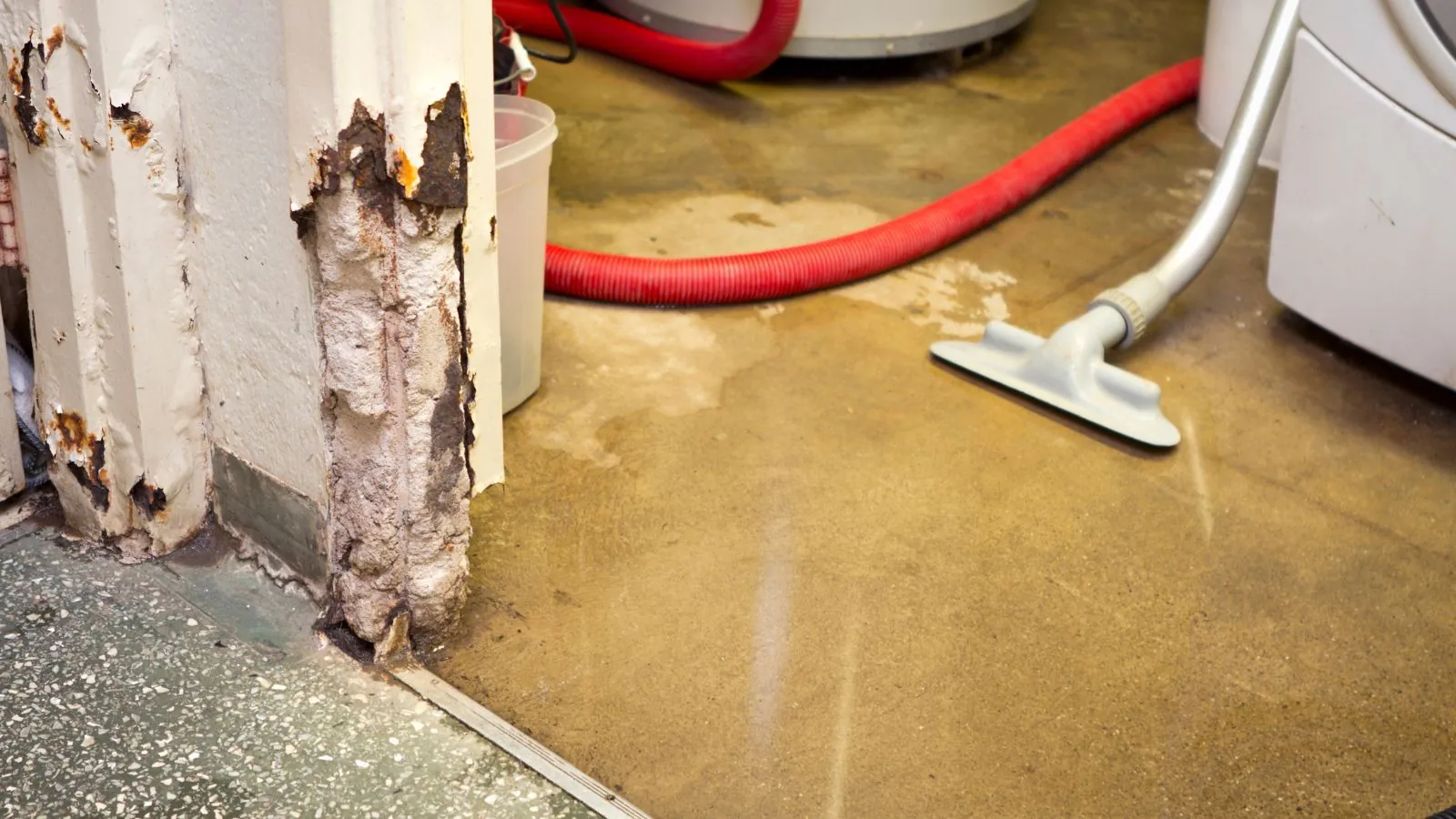
Water damage in a rental raises the question of who is responsible. The answer depends on the lease, the cause and the policies each side carries. In the first hours, the steps are the same for tenants and landlords: stop the water, notify the other party in writing and document everything. This guide covers those steps and the questions that follow.
It is general information, not legal advice. Landlord and tenant rights vary, so check your lease and consider speaking with an attorney or a legal aid office if a dispute arises.
For tenants: first steps
- Shut off the water at the fixture or the main if you can do it safely..
- Stay away from electrical hazards and call the utility or 911 if needed..
- Notify the landlord or property manager right away, then confirm in writing with a text or email..
- Photograph and video the damage, the source and your belongings..
- Call your renters insurer to report a loss to your belongings..
Keep copies of everything you send. If it is an emergency and the landlord cannot be reached, call the 24/7 line for water removal and tell the landlord what you did.
For landlords: first steps
A landlord should respond quickly, stop the source, arrange extraction and drying and notify their insurer. A fast response limits damage and tenant disruption. Document the property before and after, and keep records of who was told what and when.
Landlords typically carry a policy on the building, while tenants carry a renters policy on their belongings. Neither policy automatically covers the other's loss, which is why records matter.
| Question | Tenant concern | Landlord concern. |
|---|---|---|
| Who stops the water? | Shut the fixture if safe | Arrange plumber and mitigation. |
| Who documents? | Belongings and conditions | Building and repairs. |
| Who insures what? | Renters policy for contents | Property policy for building. |
| Is the unit livable? | Ask in writing about options | Decide on repairs and timeline. |
| Rent and relocation? | Check the lease and local law | Check the lease and local law. |
Water in a rental unit right now?
Call the 24/7 line. Tell the dispatcher it is a rental.
Call (816) 575-8173Who pays depends on the cause
If the water came from a failed building system, such as a supply line or water heater, the landlord is usually responsible for the repairs. If a tenant's negligence caused it, such as leaving a tap running, the tenant or their insurance may be responsible. The lease often spells this out.
When the cause is unclear, get a plumber's written report. It helps both sides and any insurer.
Living in or leaving
Drying equipment is loud and large, and a unit may not be comfortable while it runs. Ask the landlord in writing about options. Do not stop paying rent without understanding your lease and local law, since that can create other problems.
Mold is a common follow-up if drying is delayed. Report any musty smell or visible growth in writing, and see the mold remediation page for the steps a professional follows.
Habits that prevent disputes
- Take move-in photos of every room and keep them..
- Report leaks and stains as soon as you notice them, in writing..
- Keep shutoff locations known and accessible..
- Keep a copy of the lease and any addendum about water or mold..
- Ask whether the landlord requires renters insurance and what it must cover..
These steps help tenants prove what was already there and landlords prove what was reported and when. Both sides benefit from a clear record.
Mold and habitability concerns
If mold appears after a leak, notify the landlord in writing and describe what you see. Landlords may need to arrange drying and cleanup. Whether a unit is habitable can be a legal question, and the answer depends on local law and the facts. A legal aid office or an attorney can advise on your rights.
For the physical side, the mold remediation page explains the steps a professional takes.
Multi-unit buildings
In apartment buildings, water from one unit can travel down walls and ceilings to others. The landlord often coordinates drying across units so equipment is placed everywhere it is needed. Tenants can help by granting access and by moving belongings away from affected walls.
If you are a tenant in a neighboring unit with no visible damage, ask whether moisture readings were taken in your walls. Hidden moisture can show up later as mold or damaged drywall.
Renters insurance basics
A renters policy typically covers a tenant's belongings and may include living expenses if a unit cannot be used. It generally does not cover the building itself. Ask your insurer what it covers for water damage and whether there are limits on certain items such as electronics or jewelry.
Photograph and list your belongings before a loss happens. Doing it in a quiet moment is far easier than doing it in a flooded apartment.
Talking to the landlord
Keep messages short, factual and in writing. State what happened, when you noticed it, what you did to limit the damage and what you are asking for. Attach photos. Save every reply. If a call is the only way to reach someone, follow it with a message that summarizes what was said.
Courtesy helps. Most landlords want the problem fixed quickly because delays raise repair costs for them too.
According to the EPA guidelines on mold, controlling moisture is the key step, and professional drying follows the ANSI/IICRC S500 standard.
What to do first in a rental
- Stop the water if it is safe..
- Stay out of water near outlets..
- Notify the landlord in writing..
- Photograph the damage and your belongings..
A local note for Blue Springs
Rentals in Blue Springs include apartments, duplexes and single-family homes. For a multi-unit building, water often reaches the unit below, so the problem becomes shared. Tell the landlord quickly so all affected units are checked.
If you are unsure of your rights, a legal aid office or the Missouri Attorney General's consumer resources are good places to start. Crews also serve rentals in Independence and Lees Summit. See the commercial page for multi-unit properties.
Questions to settle in writing
- Who is paying for emergency drying?.
- Is the unit safe to occupy?.
- How long is the repair expected to take?.
- How will lost belongings be handled?.
- What happens to rent during repairs?.
Rental water damage questions
It depends on the cause, the lease and the policies. Building system failures are usually the landlord's responsibility.
In an emergency, yes, and tell the landlord right away. Otherwise coordinate with the landlord.
No. It usually covers your belongings, not the structure.
Document your attempts in writing and seek advice from a legal aid office or an attorney.