
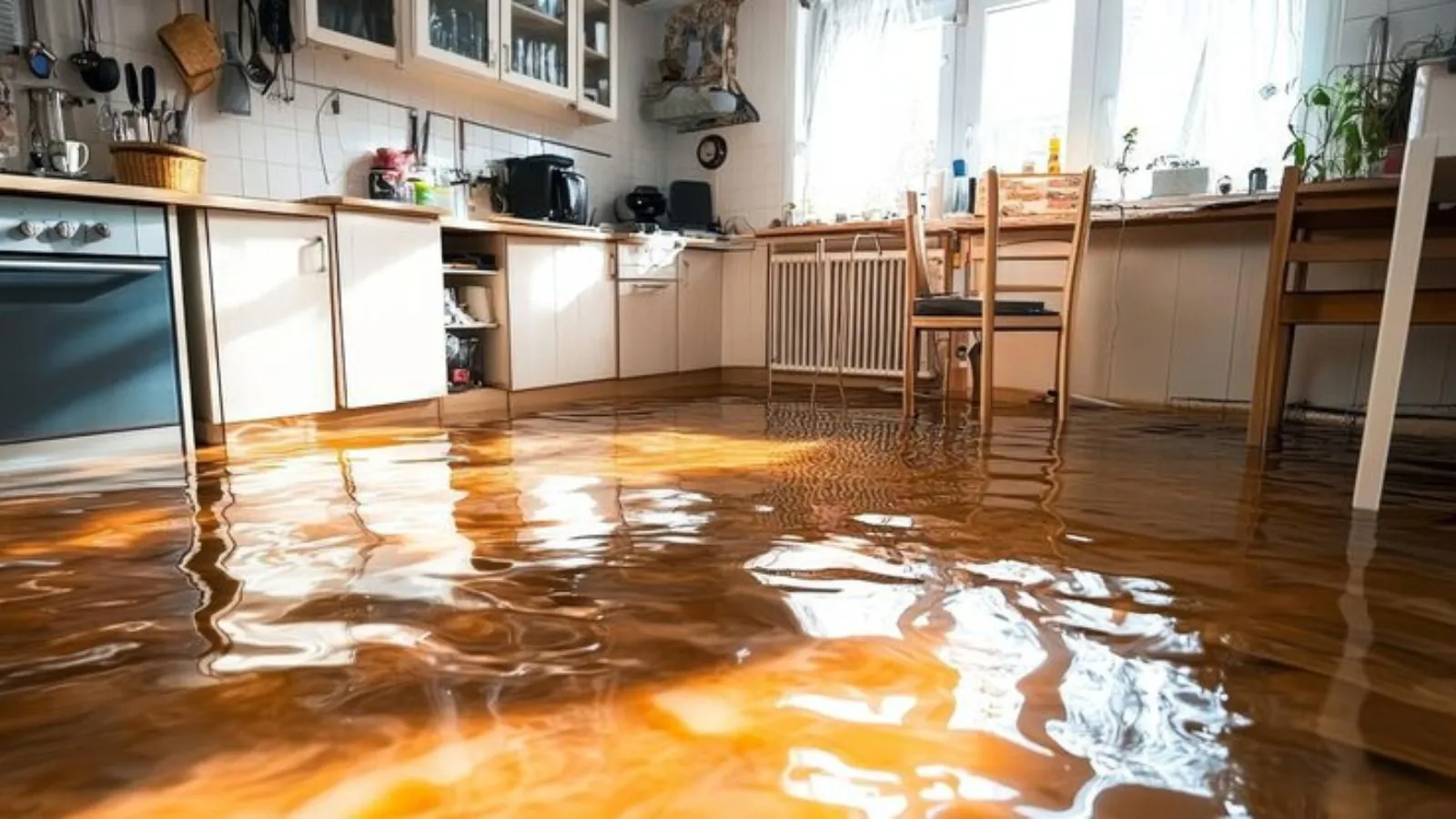
Whether you need a permit to repair water damage depends on what the work involves. Drying equipment and cleanup generally do not require one, but structural, electrical, plumbing and some rebuild work can. Rules vary by city and project, so this guide explains what usually triggers a permit and how to get a clear answer from the City of Blue Springs.
It does not state what the city requires. Confirm with the city before work begins, since requirements can change.
Why permits come up after water damage
A permit is the city's way of checking that work meets building safety codes. After a water loss, the work that most often draws attention is anything that changes the structure or the building systems. That includes replacing a water heater, rewiring, moving plumbing or rebuilding walls.
Cosmetic work such as paint and flooring replacement often does not need a permit, but a large rebuild may. Do not guess. A short call can save a stop-work order later.
| Type of work | Often asked about | What to do. |
|---|---|---|
| Extraction and drying | Rarely | Confirm with the city if unsure. |
| Replacing drywall and paint | Sometimes, if the scope is large | Ask the building division. |
| Electrical repairs | Often | Ask the city and use a licensed electrician. |
| Plumbing repairs and fixtures | Often | Ask the city and use a licensed plumber. |
| Water heater replacement | Often | Ask the city before installing. |
| Structural repair | Yes, typically | Ask the building division first. |
Who to ask in Blue Springs
In Blue Springs, the Community Development Building Division is at City Hall, 903 W Main Street. Ask what permits apply to your project, what documents they want and how inspections work. Have your address, a short description of the work and the contractor's information ready.
If you live in a neighboring town, the office differs. Independence handles building permits at 111 E Maple Avenue, and Oak Grove has a Building Department at 2110 S Broadway. Lees Summit City Hall is at 220 SE Green Street.
Need drying started while you ask the city?
Drying and extraction usually come first. Call the 24/7 line.
Call (816) 575-8173Floodplain rules
If your home is in a mapped flood hazard area, repairs can fall under floodplain rules. The City of Blue Springs sets floodplain overlay districts in its Unified Development Code, and substantial damage rules can apply to major repairs. Ask the city whether your address is in a floodplain overlay and what that means for repairs.
You can check your address on the FEMA Flood Map Service Center at msc.fema.gov. The flood damage page has more on the flood side.
Contractor responsibilities
Ask your contractor who pulls permits and who pays for them. A contractor who says a permit is not needed for work you suspect requires one deserves a second look. Ask for the permit number and keep a copy.
The Missouri Attorney General publishes contractor tips. Read them before signing. A permitted job also gives your insurer and a future buyer more confidence.
What to have ready when you call the city
- Your address and parcel if you have it..
- A plain description of what was damaged and what will be done..
- Photos of the damage..
- The contractor's name and contact information..
- Your insurance claim number, if relevant..
What happens if work is done without a permit
Unpermitted work can create problems later. A city may require you to open walls for inspection, pay fees or redo work. An insurer may question a claim tied to unpermitted work. A buyer or lender may ask for permit records when you sell.
That does not mean every repair needs a permit. It means the cost of asking is small compared with the cost of guessing wrong.
Licensed trades and why they matter
Electrical and plumbing work are trades where many cities expect licensed professionals. Ask the contractor for license information and verify it with the issuing office. Ask whether the work will be inspected and who schedules the inspection.
For major structural work, a design professional may be involved. The city can tell you what documents it needs. Rules vary, so rely on the city rather than on a general guide.
Timing and communication
Ask how long permits and inspections usually take, and plan the rebuild around that. Keep copies of every approval and inspection record. If an inspector asks for changes, get them in writing and ask your contractor how it affects the schedule and the price. Also tell your insurer, since permit fees and delays can be part of a claim.
A simple script for the call to the city
Keep the call short and specific. Say that you had water damage at your address, that drying is underway and that you are planning repairs. Then list the work you expect, such as replacing drywall, repainting, replacing a water heater or repairing a supply line. Ask whether any of it needs a permit, what the fee is and how inspections are scheduled.
Write down the name of the person you spoke with and the date. If the answer is that no permit is needed, ask them to confirm by email when possible. That small record can matter later if a buyer, lender or insurer asks.
Where drying and permits intersect
Drying equipment and temporary protection typically come first, and rebuild work follows after readings confirm the structure is dry. That order helps with permits too. Inspectors prefer to see framing and wiring after they have dried, and some will not approve closing a wall that still reads wet.
Ask your restoration company to share the final readings with your contractor and the inspector. A clean record of drying makes the rest of the project go more smoothly.
For the drying itself, professionals follow the ANSI/IICRC S500 standard, but permit rules come from the city, not from industry standards.
A local note for Blue Springs
Building safety departments are busy after storms. Call early and ask about timing, since an inspection that is delayed can hold up the rebuild. Emergency mitigation is typically allowed to start while you sort out permits for the rest.
Crews serve Independence and Oak Grove too, so the same advice applies across the metro, with a different office in each city.
Rebuild tasks tied to specific rooms are covered on the kitchen page and the wall page.
Permit questions
Drying and cleanup usually do not. Rebuild, electrical, plumbing or structural work might. Confirm with the city.
The Community Development Building Division at City Hall, 903 W Main Street.
Emergency mitigation usually can start. Ask the city about the repair phase.
Verify with the city yourself. A quick call settles it.